Cold plunges and saunas: What women should know before taking the plunge

Somewhere between the fifth ice bath influencer post and the third friend who swore her sauna habit “fixed everything,” you may have started wondering: is any of this designed with women in mind? Mostly, not. Here’s what the research actually says, and what a smarter, cycle-aware approach might look like.
My first experience with cold plunges
I grew up in Portugal watching my parents head into the sauna as part of their spa ritual, long before it had a hashtag attached to it. I started the same habit around nineteen, and it stuck. Cold plunging came later, in 2019, mostly to face a fear of cold I’d had for as long as I could remember. And I kept going because of how I felt afterwards: clear, alert, and calm.
I’ve always kept it gentle, though. If I was tired, sleeping badly, or on my period, I didn’t push, and I still don’t. On strong days, I could hold one degree for two minutes, no problem. Right now, postpartum, I only do my legs, at 12 to 15 degrees, building back up slowly. I learned this from listening to my own body, not from a study.
But reading the research, I saw my own instincts confirmed in the data, which is really the whole point of this article: your body has been telling you the protocol all along.
Why we’re all suddenly obsessed with hot and cold
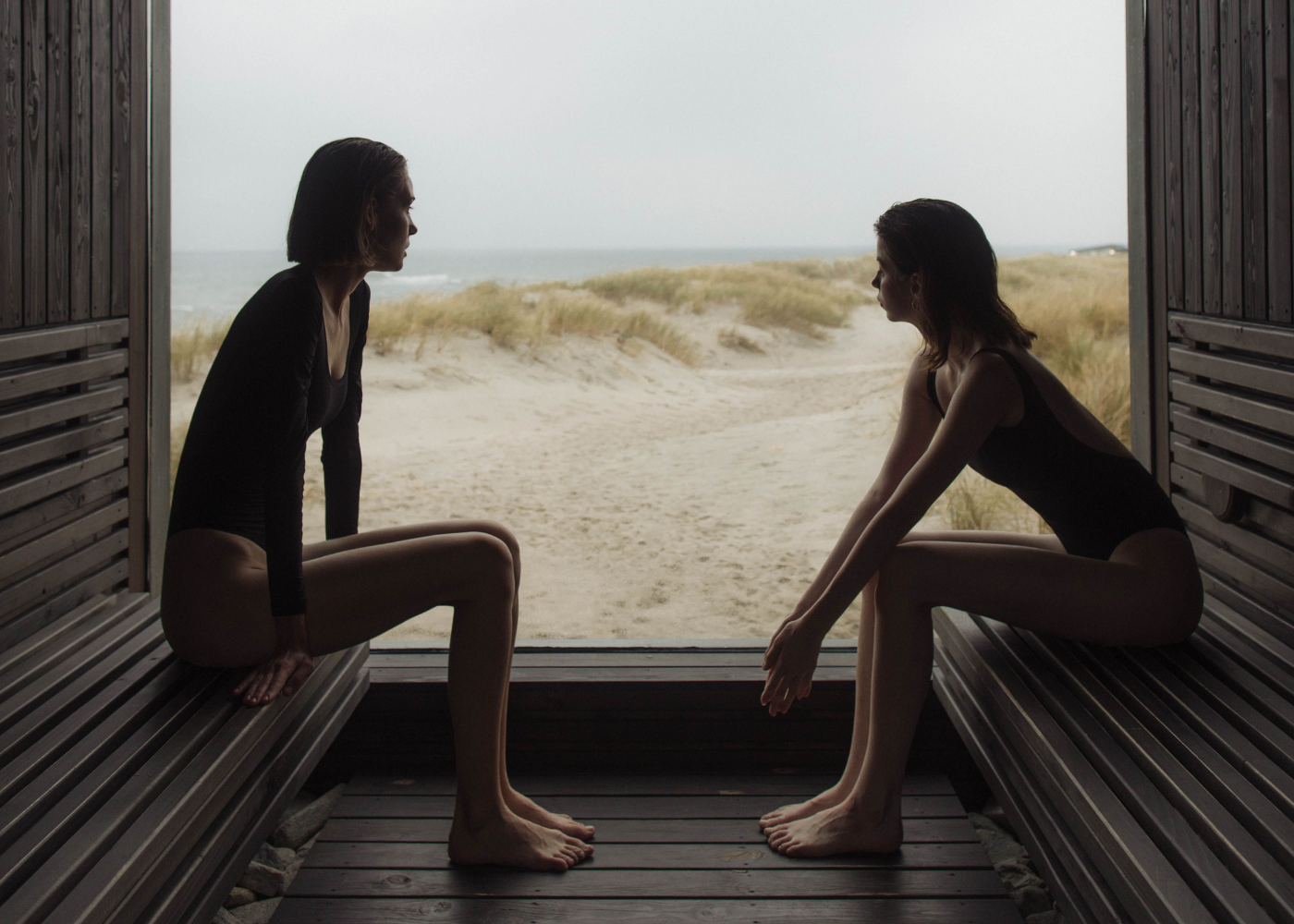
Cold plunges and saunas aren’t new. Nordic countries have alternated heat and ice for centuries. What’s new is the packaging: sleek plunge tubs, infrared cabins, and a wellness economy built on the promise that discomfort, done on purpose, makes you better. The appeal is obvious: recovery, ritual and a small daily proof of resilience, all in one.
Some of the claims are genuinely well supported. Regular sauna use has been linked to lower cardiovascular mortality in large Finnish cohort studies. Cold exposure is associated with reduced inflammation, better stress resilience and a real post-plunge mood lift, likely driven by a surge in noradrenaline and endorphins. None of this is myth. What’s missing is the asterisk that should follow almost every headline: *based on research conducted mostly in men.*
The male-data problem
A 2021 audit of exercise thermoregulation research found women made up somewhere between 11.6% and 17.8% of participants across a decade of studies. Less than a quarter of the studies that did include women even bothered to note which part of their cycle they were in. Female physiology has essentially been filed under “complicating variable” rather than “worth studying properly”, because hormones fluctuate and that’s inconvenient for a tidy study design. So for decades, science mostly studied men and assumed the rest of us would be just fine. Convenient for the researchers. A little less convenient for you, standing in an ice bath at 6am because a podcast promised it would fix your metabolism.
His body, her body: How thermoregulation differs
Even without bringing hormones into it, men and women aren’t running the same internal thermostat. Women tend to carry more body fat relative to size, which changes how heat is made and kept. A woman’s core temperature actually drops roughly half as fast as a man’s during cold water immersion, that extra insulation is doing real work. Women also tend to shiver less and lean more on non-shivering thermogenesis, quietly burning through brown fat to generate heat instead of visibly shaking about it, and generally sweat less than men at a given workload. None of this makes the female system worse at handling temperature. It’s simply a different machine.
Enter the hormones: Oestrogen, progesterone and temperature
Oestrogen and progesterone aren’t only running the show on your period and your mood, they’re talking directly to your hypothalamus, the brain’s internal thermostat, and adjusting exactly when your body decides to sweat or shiver.
Progesterone turns the dial up: your core temperature can run 0.3 to 0.7°C higher during the luteal phase, the back half of your cycle, than during the follicular phase. Oestrogen does the opposite, helping you dump heat and run a touch cooler. Which means your baseline temperature isn’t some fixed number, it’s on a monthly loop, and your tolerance for the plunge tank or the sauna bench is quietly shifting along with it, whether you’ve clocked it or not.
Cold exposure across the cycle: What the research shows
So does that mean cold plunging is riskier in the luteal phase? Not necessarily, and this is the part worth actually sitting with. Studies show your baseline temperature genuinely shifts across your cycle, but your body’s defensive response to cold – the vasoconstriction, the point where shivering kicks in – stays fairly steady wherever you are in your cycle. Your body can still protect itself perfectly well in the second half of the month.
What does change is how it feels. Plenty of women report that the follicular phase, that window after your period when oestrogen is climbing and energy is coming back, makes cold immersion feel almost easy. In the luteal phase, with a higher baseline temperature, that same plunge can feel disproportionately shocking.
What about saunas?
Saunas, meanwhile, seem to be quietly one of the better-kept secrets for women’s health specifically. Regular heat exposure has been shown to ease the frequency and intensity of hot flushes and improve sleep in perimenopausal and postmenopausal women, essentially training your thermoregulatory system to stop treating every internal heat wave like a five-alarm fire. Some research points to three or four sessions a week as a useful sweet spot, though this should be adapted to the individual.
During the luteal phase, when core temperature is already elevated, sauna sessions may feel more intense sooner, and heat exposure guidelines are far more conservative during pregnancy, worth discussing with a doctor directly.
A sample cycle-aware protocol
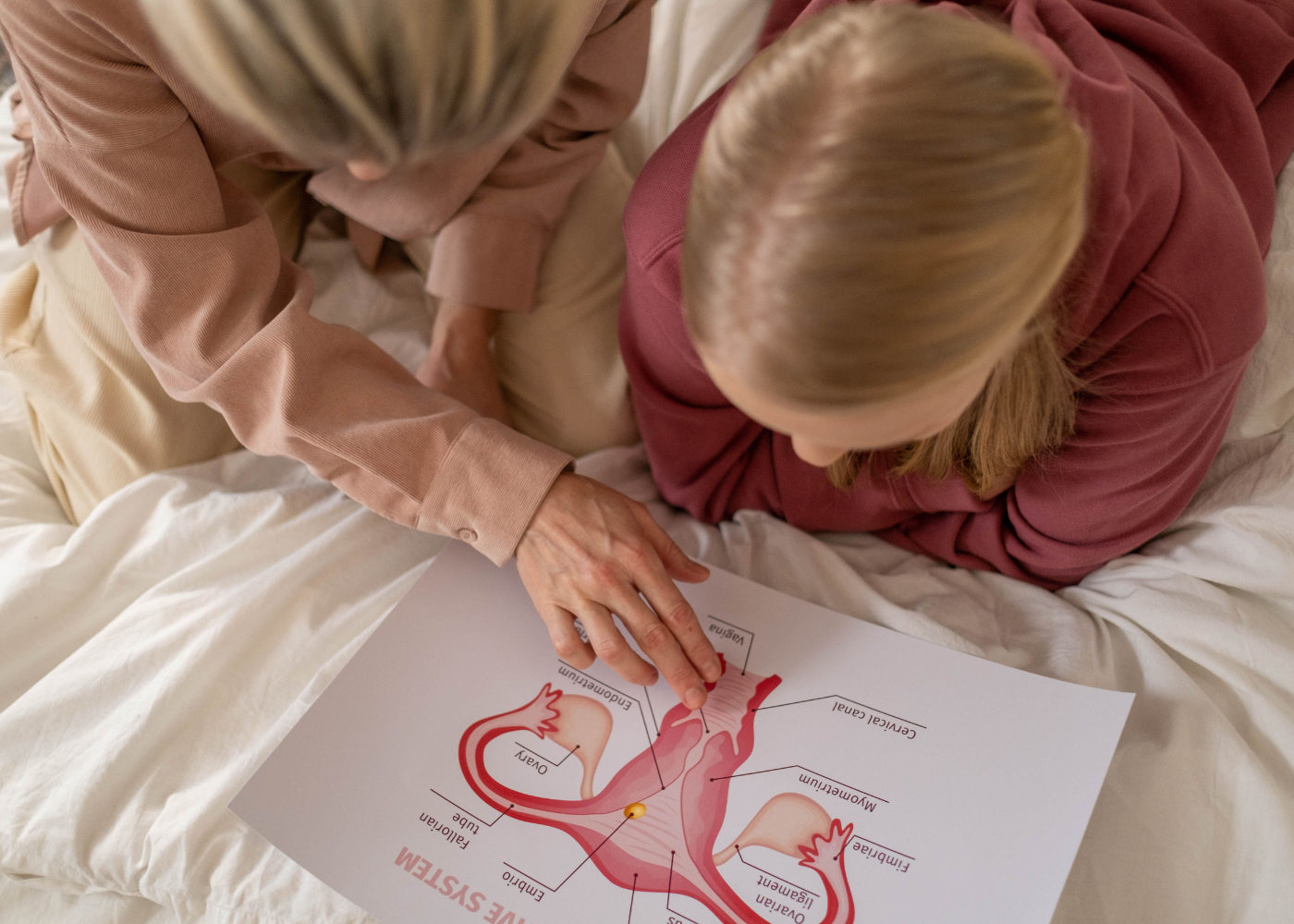
This isn’t a prescription, but a starting template you can adjust as you get to know your own patterns.
Menstrual phase (roughly days 1–5)
- Cold: keep it brief and mild, around 12–15°C for one to two minutes, or skip it entirely if your energy is low.
- Sauna: gentle heat can ease cramps and support relaxation. Ten to fifteen minutes at a lower temperature is plenty.
Follicular phase (roughly days 6–13)
- Cold: often the best window for your more ambitious sessions. Oestrogen and energy are rising, and tolerance tends to be higher, so this is the time to build toward colder water or longer holds if that’s a goal.
- Sauna: full sessions, fifteen to twenty minutes, tend to feel most sustainable here.
Ovulation (around day 14)
- Cold and heat: typically the phase of peak tolerance for many women, a reasonable time to test your edge, if that interests you.
Luteal phase (roughly days 15–28)
- Cold: dial it back, shorter duration, slightly warmer water (12–15°C rather than near freezing), especially in the final premenstrual week.
- Sauna: still beneficial, but sessions may feel more intense sooner since core temperature is already elevated. Shorten the session or lower the heat if needed.
And for life stages outside the monthly cycle, postpartum, perimenopause, the same principle applies, just at a larger scale: start gentle, rebuild slowly, and let how you actually feel set the pace rather than a number you read online. It’s exactly what I’m doing with my own legs-only, twelve-to-fifteen-degree postpartum practice right now.
More tips to know
- Track your cycle alongside your thermal practice for a month or two. Not to overthink it, just to notice how cold and heat actually feel to you week by week.
- Go gentler with cold exposure, shorter and slightly warmer, during the luteal phase, and save your more ambitious sessions for the follicular phase.
- Sauna appears broadly beneficial across the cycle, with particular promise for easing menopausal symptoms. Ease in gradually rather than matching someone else’s protocol.
- Warm your hands and feet properly after cold exposure. Women show a stronger cold-induced vasodilation response in the extremities, so your fingers deserve the aftercare.
- Treat every protocol you read online, including this one, as a starting hypothesis, not a rule. Your own data is still the most reliable input you have.
Remember to pay attention to your body
Cold plunges and saunas aren’t wrong for women. The confidence behind the protocols being sold to you has simply outpaced the evidence behind them. Until the research catches up, and slowly, it is, the smartest, most honestly effective protocol might be the one you’re already halfway running: paying attention to your own cycle like the data source it actually is.
Resources
- Comparison of thermoregulatory responses between men and women immersed in cold water — Journal of Applied Physiology
- Cardiovascular Stress and Characteristics of Cold-Induced Vasodilation in Women and Men during Cold-Water Immersion — PMC
- Sex differences in autonomic functions and cognitive performance during cold-air exposure and cold-water partial immersion — PMC
- Effect of menstrual cycle on thermal perception and autonomic thermoregulatory responses during mild cold exposure — ScienceDirect
- Influences of ovarian hormones on physiological responses to cold in women — Temperature (Taylor & Francis)
- Female (Under) Representation in Exercise Thermoregulation Research — Sports Medicine Open
- Underrepresentation of women in exercise science and physiology research is associated with authorship gender — Journal of Applied Physiology
- “Invisible Sportswomen”: The Sex Data Gap in Sport and Exercise Science Research — ResearchGate
- Sauna bathing is associated with reduced cardiovascular mortality and improves risk prediction in men and women — PMC
- Can Sauna Bathing Help Alleviate Menopausal Hot Flashes? — saunas.org
Are cold plunges safe for women?
Cold plunges can be safe for women, but taking a more individualised approach based on your energy levels, cycle phase and life stage rather than following a one-size-fits-all protocol.
Should women change their cold plunge routine during their menstrual cycle?
Your tolerance for cold may change throughout your cycle. Keeping cold exposure gentler during the luteal phase and considering more ambitious sessions during the follicular phase, depending on how your body feels.
Is sauna good for women's health?
Research suggests regular sauna use may support women's health, including easing hot flushes and improving sleep for some perimenopausal and postmenopausal women. The article recommends adapting frequency, temperature and duration to the individual.
Is it better to sauna or cold plunge?
Neither is universally better. Saunas and cold plunges affect the body differently. Choose your approach based on your goals, cycle phase, energy levels and how your body responds.
Does your menstrual cycle affect cold tolerance?
Yes. Hormonal changes can affect your core body temperature across the menstrual cycle. The luteal phase typically brings a slightly higher baseline temperature, which may make cold exposure feel more intense.
What is the best time in your cycle to cold plunge?
The follicular phase, after your period and as oestrogen rises, may be a more comfortable time for women to try colder water or longer sessions. However, individual tolerance varies.
Important Notice: This article is for general information and should not be considered medical advice. While we strive for accuracy, medical conditions vary, and the treatments mentioned may not suit everyone. Consult a qualified healthcare professional for personalised medical guidance.