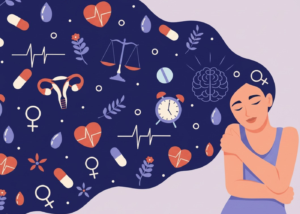

The cortisol problem: How high-performance careers rewire your stress response

It starts with not being able to sleep, even on holiday or your day off. Lying flat in a sun-drenched villa with no emails to answer, the mind keeps running its usual 3 am loop: Monday’s meeting, the half-drafted presentation, the never-ending list of things left undone. Sound familiar? For millions of women navigating demanding careers, caregiving, and modern-life chaos, this has nothing to do with having OCD or being quirky. It’s physiology, where your cortisol system has been thoroughly trained to stay alert, and it has forgotten how to switch off.
Is cortisol really to blame for everything from “cortisol face” to burnout? And how do you know when stress has crossed the line from normal to chronic? We spoke to experts to separate fact from fiction, unpack what’s really happening inside your body, and explore what it actually takes to support your nervous system.
What is cortisol and how does it affect women’s health?
Cortisol has become a wellness buzzword, slapped on everything from supplements to morning routines that promise to “tame” your stress hormone. But cortisol isn’t the villain it’s often made out to be.
Produced by the adrenal glands, cortisol plays a vital role in keeping your body running smoothly. It helps regulate your sleep-wake cycle, manage inflammation, fuel your body with energy and coordinate your immune response. Your cortisol levels naturally peak in the morning to help you wake up, then gradually taper off in the evening so your body knows it’s time to rest.
Under acute stress, say a near-miss in traffic, a big pitch, or you vicariously stressing about your child’s exams, the cortisol spikes rapidly, sharpening focus. This is fight-or-flight doing what evolution intended and is good, except when the system never stands down and is more in this mode than not.
Acute vs. chronic stress (and why chronic is the real problem)
Chronic stress is the unintended exploitation of that emergency system. When the emotional load never lifts, cortisol stays elevated, and the HPA axis, which is the body’s stress command centre, stays in low-grade activation. A 2025 review in the International Journal of Molecular Sciences confirmed that this dysregulation has consequences across the brain, immune system, cardiovascular system, gut, skin, and musculoskeletal system. It can be cumulative and quiet, and often, easily dismissed as “just being tired.”
Dr Menka Gupta, a functional medicine physician from Nutra Nourish, notes that true chronic cortisol elevation is uncommon outside conditions like Cushing Syndrome, but prolonged stress can still keep the body’s stress response persistently activated.
“Over time, this may contribute to disrupted ovulation and lower progesterone production, increased abdominal fat storage, insulin resistance, cravings, poor sleep, fatigue, and changes in gut function and the gut microbiome,” she explains.
“The early warning signs are easy to dismiss: feeling anxious or ‘wired but tired,’ insomnia, brain fog, digestive issues, irregular menstrual cycles, hair thinning, and abdominal weight gain, though none are specific to cortisol alone.”
Why are women more vulnerable?

Women are 49% more likely to have raised cortisol levels than men, according to 2024 data from Medichecks, and the APA’s 2025 Stress in America survey found women are more likely than men to rate their workplace stress as severe (22% vs. 18%).
Biology plays a role: estrogen and cortisol are closely entangled, and chronically elevated cortisol can suppress estrogen and disrupt the hormonal rhythm governing the menstrual cycle and fertility.
But it isn’t only biological; women continue to carry a disproportionate share of “invisible labour,” the mental load of anticipating others’ needs and holding a household together, often alongside demanding careers. The nervous system doesn’t distinguish between a work deadline and a school-run crisis; it processes all of it as load.
Which means the exhaustion isn’t weakness. It’s arithmetic.
What chronic stress does to the female body
Hormones and metabolism: Cortisol and progesterone share the same building block, pregnenolone. Under chronic stress, the body prioritises producing cortisol, a process sometimes referred to as “pregnenolone steal”. This can leave less available for progesterone, potentially disrupting ovulation.
Elevated cortisol can also promote abdominal fat storage, increase insulin resistance, and skew hunger hormones towards cravings as the body shifts into survival mode and tries to conserve energy.
Sleep: Cortisol and melatonin work in opposition. When chronic stress disrupts this natural rhythm, you can end up feeling wired at 11pm but exhausted by 9am, even after what should have been a full night’s sleep.
Skin: Cortisol stimulates the sebaceous glands to produce more oil while also breaking down collagen and elastin. A 2024 review in the International Journal of Dermatology found that cortisol is actively produced and regenerated within the skin itself, where it suppresses collagen production and contributes to skin ageing and thinning.
Mental wellbeing: Prolonged exposure to cortisol can affect the hippocampus, the part of the brain responsible for memory and emotional regulation. Research published in Frontiers in Endocrinology also suggests women may have a stronger physiological and emotional response to stress than men, which could partly explain their increased risk of anxiety and depression.
The high-achiever trap: Why ambition and high cortisol go together

There’s a cruel paradox for high-performing women: the traits that drive success – conscientiousness, reliability and the inability to do anything at half-pace – are the same traits that keep the nervous system in overdrive.
NLP master trainer, coach, and author Pamela Puja Kirpalani sees this pattern often. “High-achieving women are particularly vulnerable to conditioned stress responses because, more often than not, they have learned to equate self-worth with performance,” she says. “Their brains are no longer able to clearly distinguish between ambition and survival. This builds gradually. The brain repeatedly associates conflict, criticism, or high expectations with the need to stay constantly alert, and the nervous system begins reacting before the conscious mind has had the chance to assess whether a threat is real.”
Internal dialogue matters too, Kirpalani says: “Thoughts like ‘I always fail’ or ‘I have to hold it all together’ keep the brain scanning for danger, even in situations that are safe.”
One technique she uses to interrupt this is the Swish Pattern, which involves replacing an unhelpful mental image of failing or overwhelm with a vivid image of calm and confidence. “With repetition over time, the brain starts reaching for the new image instead of the old one, making it much easier to respond intentionally rather than react automatically.”
Practical steps to lower cortisol naturally
- Protect sleep hygiene. Consistent sleep and wake times, a cool dark bedroom, and 30 minutes of screen-free time before bed support cortisol rhythm restoration.
- Regulate through breath. Box breathing and physiological sighs have measurable effects on heart rate variability and cortisol response.
- Move, but not always hard. Intense exercise can further elevate cortisol short-term; walking, yoga, and moderate strength training support regulation without adding load.
- Stabilise blood sugar. Regular, protein-forward meals reduce cortisol spikes triggered by blood sugar crashes.
- Audit your “yes” habit. Every reflexive yes adds physiological load; boundaries are biological, not just emotional.
- Consider support. Dr Gupta notes that functional medicine looks at the whole picture: stress hormones, estrogen and progesterone balance, nutrition, and lifestyle rather than treating symptoms in isolation, with care tailored to the individual.
A final thought
Cortisol and women’s health isn’t a fringe wellness conversation. It’s a physiological reality shaping how women sleep, think, feel, and function — one too often dismissed as ordinary busyness. Awareness is where agency begins because the nervous system has been trying to protect you. The work is teaching it that it’s finally safe to rest.
CITATIONS & SOURCES
- American Psychological Association (2025). Stress in America: A Crisis of Connection. https://www.apa.org/pubs/reports/stress-in-america/2025/full-report.pdf
- Medichecks (2025). Are Women More Stressed Than Men? (2024 data). https://www.medichecks.com/blogs/womens-health/are-women-more-stressed-than-men
- Gutierrez Nunez S, Peixoto Rabelo S, Subotic N, Caruso JW, Knezevic NN (2025). Chronic Stress and Autoimmunity: The Role of HPA Axis and Cortisol Dysregulation. International Journal of Molecular Sciences, 26(20), 9994. https://pmc.ncbi.nlm.nih.gov/articles/PMC12563903/
- Hall L, Hart R (2024). Role of corticosteroids in skin physiology and therapeutic potential of an 11β-HSD1 inhibitor: A review. International Journal of Dermatology, 63(4), 443–454. https://onlinelibrary.wiley.com/doi/10.1111/ijd.16967
- James KA, Stromin JI, Steenkamp N, Combrinck MI (2023). Understanding the relationships between physiological and psychosocial stress, cortisol, and cognition. Frontiers in Endocrinology, 14, 1085950. https://www.frontiersin.org/journals/endocrinology/articles/10.3389/fendo.2023.1085950/full
- Kaur J, Gandhi J, Sharma S (2025). Physiology, Cortisol. StatPearls [Internet]. https://www.ncbi.nlm.nih.gov/books/NBK538239/
- Dr Menka Gupta, IFMCP, MBBS, MRCOG part 1 — expert interview, HoneyGlow Exclusive
- Pamela Puja Kirpalani, NLP Master Trainer & Coach — expert interview, HoneyGlow Exclusive
Important Notice: This article is for general information and should not be considered medical advice. While we strive for accuracy, medical conditions vary, and the treatments mentioned may not suit everyone. Consult a qualified healthcare professional for personalised medical guidance.