The great mitochondria makeover: What works, what doesn’t and what we still don’t know

Can your body get a mini workout while you sit back and do absolutely nothing? A new centre at Singapore’s National University Hospital is putting the idea to the test.
At the QuantumTx–NUH MitoCharge Muscle Health Centre, visitors slip an arm or leg into the hollow centre of a humming machine. It looks a little like an MRI scanner, but uses much weaker magnetic pulses for a very different purpose.
Opened on 15 May 2026, the centre offers a Singapore-developed technology intended to mimic some of exercise’s effects on muscle cells, without an overenthusiastic personal trainer in sight. The pulses place the cells under mild stress, prompting their mitochondria — the cell’s energy producers — to adapt and, potentially, power the muscle more efficiently.
Yet nothing appears to be happening; there is no sweat, strain or sound to suggest a workout is taking place.

Since its launch, the machine is not just a hit among seniors, who may find a conventional workout too physically demanding, but amateur and professional athletes also use the company’s programmes to improve recovery in the short term and endurance over time.
Scientists are beginning to understand what may be happening beneath the surface.
In a 2022 preclinical study, faint magnetic pulses appeared to give the cells’ energy-producing machinery something of a spring clean.
First, the cells began breaking down worn-out or damaged mitochondria — a housekeeping process known as mitophagy. They then started producing new mitochondrial components through a process called mitochondrial biogenesis. Put simply, the magnetic pulses appeared to help cells remove damaged parts and replace them with new ones.
Girl power, cellular edition
The word may be turning up everywhere from longevity clinics to supplement labels, but mitochondria are simply microscopic power stations inside our cells, converting nutrients into the energy required for almost everything the body does, from contracting a muscle to repairing tissue.
The interest in mitochondria is understandable.
These microscopic structures help convert nutrients into the energy that powers nearly every process in the body, from contracting a muscle to repairing tissue.
Healthy mitochondria are closely associated with general wellbeing, while mitochondrial dysfunction has been implicated in conditions ranging from metabolic and cardiovascular disease to neurodegenerative disorders and chronic fatigue syndrome.
There is a cellular catch, however: mitochondria may be universal, but according to Vincenzo Sorrentino, Assistant Professor with the Healthy Longevity Translational Research Programme and Department of Biochemistry at NUS, much of what science knows about how they age has been drawn from male biology.
As researchers began studying women more closely, they found possible differences in how female mitochondria produce and use energy, respond to cell damage and cope with stress.
The cellular slowdown
Mitochondria, it seems, do not escape the indignities of age. As they become less efficient over time, muscles may struggle to meet their energy demands, potentially showing up as fatigue, diminished stamina, slower recovery and a gradual loss of strength.
But mitochondrial ageing is more complicated than the body’s batteries simply running flat.
“We tend to imagine that mitochondria gradually accumulate damage, like old batteries becoming depleted,” says Sorrentino. “But mitochondria are not static — they are constantly repairing, remodelling and replacing themselves.”

For women, that process may be affected by one of the most dramatic biological transitions of adult life.
“Women experience a major hormonal transition during menopause because oestrogen has important effects on how efficiently mitochondria work and how well they maintain and repair themselves,” says Sorrentino, adding that declining oestrogen can bring substantial changes in muscle mass and strength.
This is especially relevant at the MitoCharge centre, where 69.52 per cent of clients are women. According to figures provided by Ivan Goh, CEO of Mitocharge, pain is by far the most common reason they seek help, followed by loss of strength and recovery.
In a clinical practice, there is rarely one symptom that points conclusively to a mitochondrial dysfunction in women, says functional medicine practitioner Dr Menka Gupta.
“Usually, I see a pattern rather than a specific symptom,” she says. “Patients often arrive complaining that they feel exhausted despite normal blood tests, or that they no longer have the energy they once did.”
Gupta cautions, however, that fatigue alone is not evidence of mitochondrial dysfunction. Anaemia, thyroid and sleep disorders, hormonal changes, infections, metabolic disease, medication and psychological stress can produce similar symptoms and must be investigated systematically.
“As a functional medicine practitioner, it’s my job to connect the dots between nutrition, metabolism, inflammation, stress, sleep, lifestyle and the patient’s symptoms, rather than looking at each symptom in isolation,” she says.
Can you hack your powerhouses?
Gupta believes women should begin thinking about mitochondrial health long before their first hot flush.
“In my practice, I see mitochondrial health as something we build throughout life rather than something we suddenly address when symptoms appear,” she says.

The 20s and 30s, she explains, are important years for building that foundation. Nutrition, muscle mass, physical activity, sleep, chronic stress, environmental exposures and metabolic health can all influence how efficiently the body produces and uses energy later in life.
The emphasis changes as women age.
“The earlier decades are about building reserves; the perimenopausal years are often about protecting that reserve and responding to changes,” says Gupta, adding that after menopause, the focus may shift towards preserving muscle mass and supporting metabolic and cardiovascular health.
For those seeking a shortcut, however, the longevity market is happy to oblige. NAD+ boosters such as NMN and NR, CoQ10 supplements, NAD+ drips and red-light treatments all promise, in one form or another, to give our cellular batteries a helping hand.
How does NAD+ help?
Sorrentino says NAD+ has a genuine scientific basis. The molecule helps mitochondria produce energy and supports processes involved in DNA repair and the body’s response to stress. Studies in ageing female mice have found that NAD+ boosters such as NMN and NR may improve mitochondrial function, egg quality and other measures of ovarian ageing.
The catch is that mice are not menopausal women — nor, to our knowledge, do they shop for supplements online.
“There is a very large step from that to saying that taking NMN or NR will slow ageing or ovarian ageing in women,” Sorrentino cautions.
Human studies show that some NAD+ supplements can raise related molecules in the body, but evidence that this leads to meaningful health benefits remains inconsistent. Research focused specifically on women is even more limited.
He is more sceptical of NAD+ drips.
Despite becoming a fixture at some longevity clinics overseas, Sorrentino says there is little clinical evidence that delivering NAD+ intravenously produces meaningful benefits beyond changing certain biological markers. Randomised human trials are still needed to determine whether the drips do more than make mitochondrial health feel reassuringly expensive.
Red-light therapy comes with a similar caveat. There are scientifically plausible ways in which light may affect cells and mitochondria, but that does not prove that every glowing commercial device — or its particular wavelength, dose and treatment schedule — will improve healthspan.
Not a licence to lounge
The same restraint should apply to the wider pursuit of mitochondrial health, says Gupta.
“More mitochondrial support is not necessarily better, particularly in someone who is already healthy,” she says. “Mitochondria are tightly regulated systems, so the goal should be to support normal function rather than continuously push energy production higher.”
Supplements and treatments marketed as mitochondrial “boosters” may sound benign, but Gupta cautions that unnecessary or excessive use can lead to nutrient imbalances, interact with medication or produce unwanted effects.
Many interventions also lack evidence showing that they deliver meaningful long-term benefits in otherwise healthy people. There is a further danger, she says, in chasing improvements in biomarkers without knowing whether those numbers translate into feeling or functioning better.
The good news however, is that technology may be able to stimulate some of the changes associated with a workout: Goh says company data shows that 70 to 80 per cent of older adults who use Mitocharge 10 minutes twice per week see improvements in mobility and balance, along with reduced pain.
“The device allows people to retrain their muscles without physical strain, helping them move more easily and improve their quality of life,” he says, pointing out that it is particularly beneficial for people whose age, illness or recovery makes conventional training difficult.
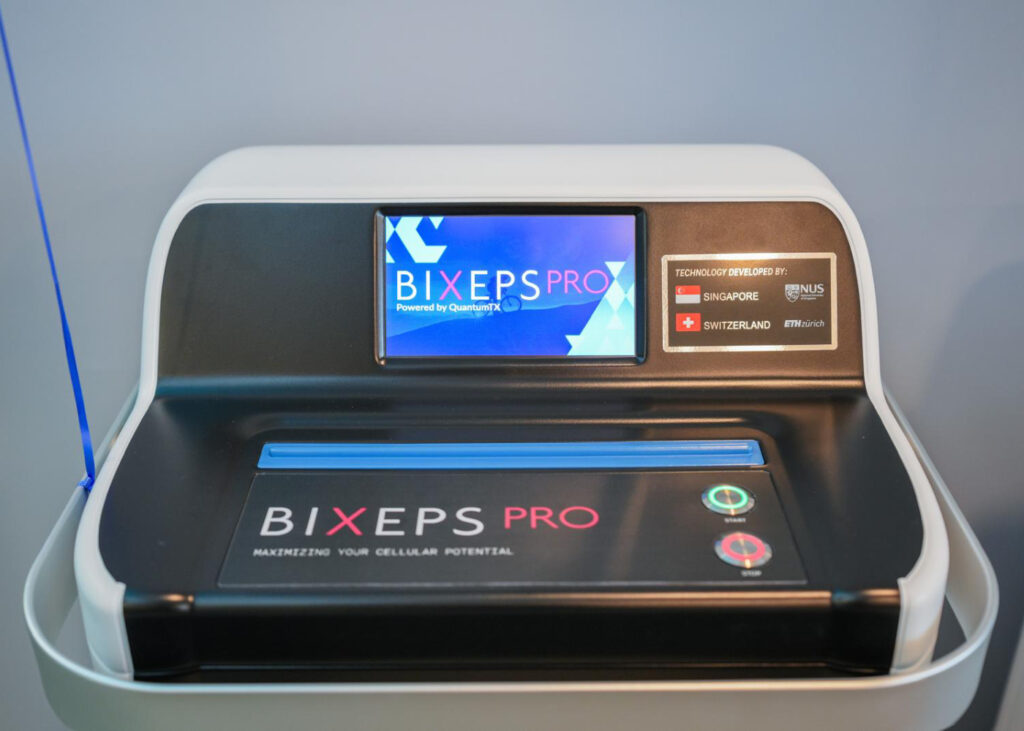
However, he also stresses that it is not a replacement for exercise: “MitoCharge is most like endurance exercise applied directly to the muscles.”
While the machine activates some of the same cellular pathways that help muscles adapt to endurance training, it cannot replicate the full-body demands of walking or running—not least the work required of the heart and lungs.
Nor can it train coordination, balance or muscle memory. Those benefits still require people to get up and move — which means couch potatoes should probably keep their trainers after all.
Frequently Asked Questions
What are mitochondria?
Mitochondria (singular: mitochondrion) are membrane-bound organelles present in the cytoplasm of nearly all eukaryotic cells. Commonly referred to as the "powerhouses of the cell," their primary role is generating chemical energy through cellular respiration.
What does the internal structure of a mitochondrion look like?
A mitochondrion has a double-membrane layout:
- Outer membrane: Permeable to ions and small uncharged molecules via protein channels called porins.Intermembrane Space: The narrow region between the inner and outer membranes where protons accumulate during respiration.
- Inner membrane: Highly selective and folded into finger-like projections called cristae. Cristae expand the surface area to house the Electron Transport Chain (ETC) complexes and ATP synthase enzymes.
- Mitochondrial matrix: The gel-like central interior containing mitochondrial DNA, ribosomes and the enzymes that drive the Krebs (citric acid) cycle and fatty acid beta-oxidation
Do all human cells have mitochondria?
No. Mature human red blood cells (erythrocytes) do not have mitochondria; they rely solely on anaerobic glycolysis to produce ATP so they do not consume the oxygen they transport. In contrast, cells with high energy requirements – such as cardiac myocytes, skeletal muscle fibers, hepatocytes (liver cells), and neurons – contain thousands of mitochondria per cell.
How do mitochondria produce energy?
Mitochondria produce ATP through oxidative phosphorylation:
- Fuel breakdown: Glucose is converted to pyruvate via glycolysis in the cytoplasm, which enters the mitochondrial matrix and converts into Acetyl-CoA.
- Krebs cycle (citric acid cycle): Acetyl-CoA is processed through an enzymatic cycle to yield electron carriers.
- Electron Transport Chain (ETC): Electrons flow through protein complexes (Complexes I–IV) on the inner membrane, pumping protons into the intermembrane space.
- ATP synthesis: The resulting electrochemical proton gradient drives protons back through ATP Synthase (Complex V), binding ADP and inorganic phosphate into ATP (adenosine triphosphate).
What else do mitochondria do besides making ATP?
Beyond energy production, mitochondria regulate several vital cellular mechanisms:
- Apoptosis (programmed cell death): When cells suffer irreversible damage, mitochondria release Cytochrome c into the cytoplasm, triggering caspase cascades that dismantle the cell safely.
- Calcium signaling: They act as rapid calcium buffers to maintain cytosolic calcium homeostasis, which regulates neurotransmitter release and muscle contractions.
- Thermogenesis (heat generation): In brown adipose tissue (BAT), the protein thermogenin (UCP1) uncouples the proton gradient from ATP synthesis, dissipating energy directly as heat.
- Biosynthesis: They assist in synthesizing heme, steroid hormones, and amino acid precursors.
What is the Endosymbiotic Theory?
Proposed by biologist Lynn Margulis, the theory explains that mitochondria originated roughly 1.5 to 2 billion years ago when an ancestral anaerobic eukaryotic cell engulfed an aerobic alphaproteobacterium. Instead of digesting the bacterium, the two formed an endosymbiotic relationship: the host provided nutrients and protection, while the bacterium generated surplus ATP. Over evolutionary time, this bacterium evolved into the modern mitochondrion.
Why do mitochondria have their own DNA (mtDNA)?
Because of their bacterial ancestry, mitochondria retain a circular, double-stranded genome called mtDNA, distinct from the linear DNA inside the cell nucleus. In humans, mtDNA contains 16,569 base pairs encoding 37 genes (13 essential electron transport chain proteins, 22 tRNAs, and 2 rRNAs).
Why is mitochondrial DNA inherited almost exclusively from the mother?
During fertilization, the sperm contributes its nuclear DNA, while its small complement of mitochondria in the tail region is degraded inside the egg cytoplasm. The ovum provides virtually all the cytoplasm and organelles for the developing zygote, meaning human mtDNA is inherited strictly through the maternal lineage.
What are mitochondrial diseases?
Mitochondrial disorders are genetic conditions caused by mutations in either mtDNA or nuclear genes responsible for mitochondrial components. Because organs with high metabolic demands suffer first when energy production fails, symptoms typically manifest as neuromuscular disorders, cardiomyopathy, encephalopathy, muscle weakness, and exercise intolerance.
How does exercise influence mitochondrial density?
Regular endurance training and high-intensity interval training (HIIT) activate master metabolic regulators, stimulating mitochondrial biogenesis (the creation of new mitochondria). This adaptation increases cellular capillary density, oxygen utilization efficiency, and fatigue resistance in skeletal muscle.
Important Notice: This article is for general information and should not be considered medical advice. While we strive for accuracy, medical conditions vary, and the treatments mentioned may not suit everyone. Consult a qualified healthcare professional for personalised medical guidance.