I put viral ear seeding to the test

In December 2025, LA-based influencer Aylen Park went viral after documenting her first experience of “ear therapy” (aka ear seeding) in South Korea.
As her therapist pressed and worked different points on her ear, Park winced, yelped, and at several moments, screamed – a reaction that has become almost as much a feature of viral auriculotherapy videos as the before-and-after reveal itself.
Within minutes, Park’s shoulder appeared to relax – an effect she likened to Botox – while subtle changes in her facial symmetry prompted her to remark that her cheeks felt firmer, too.
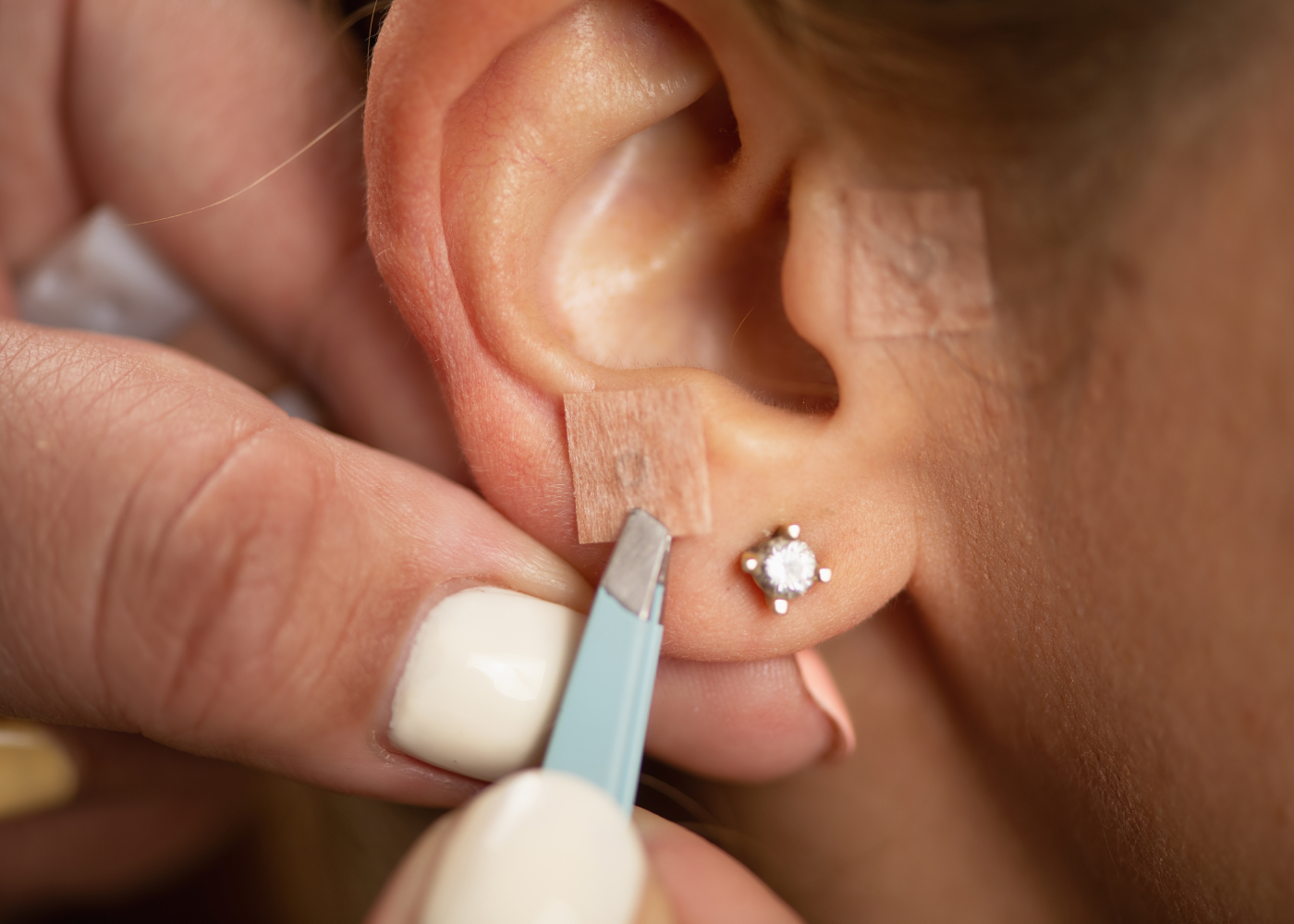
The treatment Park was undergoing is more formally known as auriculotherapy, although you may know its rather more Instagram-friendly incarnation as “ear therapy” or “ear seeding”, whereby tiny seeds or beads are secured to specific pressure points on the ear and pressed to stimulate them.
And Park is hardly alone in singing — or, more accurately, screaming — its praises.
Across TikTok and Instagram, influencers claim it has helped them with everything from better posture and sharper jawlines to improved sleep and reduced stress.
Somehow, the treatment has also found a particularly enthusiastic audience in Pilates studios across Asia, from Seoul to Bali, where ear seeds now sit rather comfortably alongside reformers, grip socks and matcha as part of the contemporary wellness aesthetic.
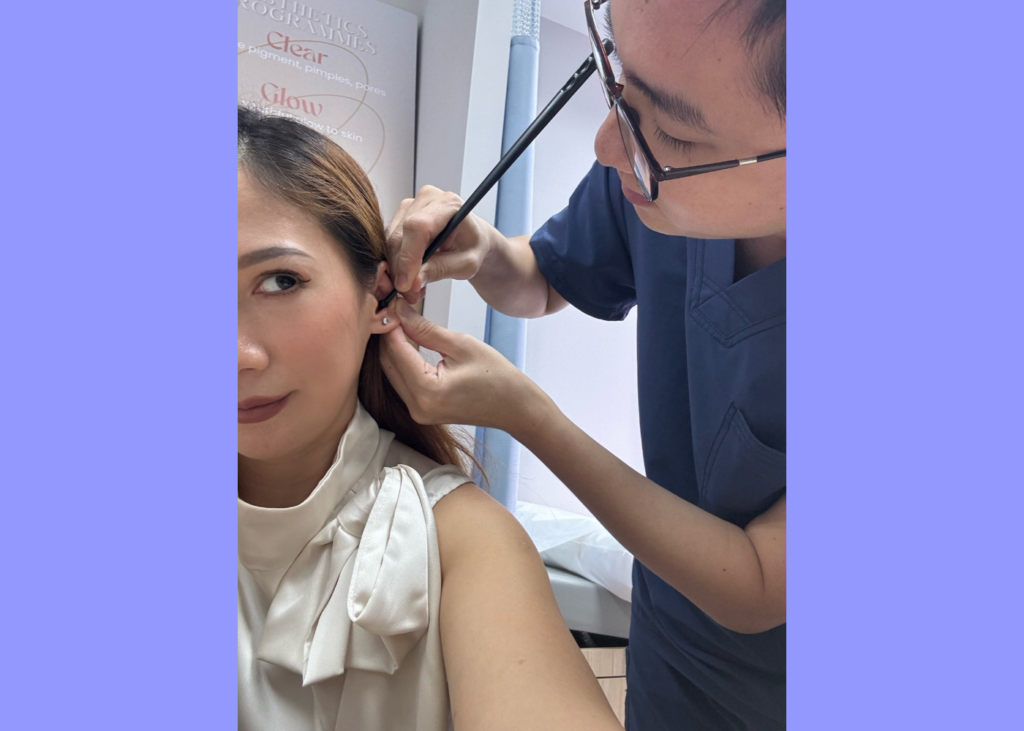
However, auriculotherapy has long been used in Traditional Chinese Medicine (TCM), which is how I find myself in Qing TCM one afternoon as medical director and TCM physician Dr Kong Teck Chuan carefully applies tiny butterfly-shaped sequins to my ears.
Seed and you shall find
Ear seeding is, in some ways, a lot like reflexology. But while reflexology works from its familiar map of the foot, auriculotherapy charts the body across the ear, with practitioners targeting much smaller, more precise points, explains Dr Kong.
“The simplest way I usually explain it to patients is that we use the ear almost like a small map of the body,” he says.
Different points are associated with the body’s meridians and functional systems, and practitioners select which ones to stimulate according to what they are trying to address.
“The ear has a very rich nerve supply, including branches of the vagus and trigeminal nerves, so stimulation of the ear can send sensory input back into the nervous system. There is ongoing research into how this may affect things such as pain perception and autonomic regulation,” he says.
Dr Kong also looks at the ear itself for clues. He presses different areas of the ear, paying attention to points that are noticeably more tender than the surrounding tissue, which can help guide where he chooses to treat. Traditionally, practitioners may also look for changes in colour, small blood vessels, swelling or differences in the skin.
While the corresponding treatment can be delivered with acupuncture needles, ear seeds offer a rather more user-friendly alternative. A tiny seed or pellet is taped onto the skin and left in place, allowing the wearer to press it periodically for repeated stimulation without having to keep a needle in.
And sometimes, they really are seeds.
Senior TCM Consultant Dr Lim Xiang Jun uses tiny seeds from the Vaccaria plant in her clinical practice Dr Xiang Jun TCM, selecting where to place them only after assessing each patient individually. But she cautions that there is no one-size-fits-all constellation of seeds.
“Two women can both come in complaining of poor sleep or stress, but what’s causing those symptoms may be completely different, so the ear seeding prescription would not necessarily be the same,” she says.
A painful process
For women, what gets mapped onto those tiny points on our ear can shift considerably over a lifetime, especially during periods of perimenopause and menopause.
But one point Dr Kong frequently uses on females is shenmen, located on the upper cartilage, which is traditionally associated with stress, poor sleep, tension and pain.
As for me, I had been having a particularly frantic week and was really just hoping for a little R&R.
Dr Kong, however, had other ideas. After examining my tongue — part of a standard TCM assessment — Dr Kong detected signs that, in TCM terms, pointed to less-than-optimal blood circulation.
And so he applied three thoroughly harmless-looking butterfly stickers to each ear. They were tiny. They were sparkly. They looked like something I might have found in a primary-school stationery set. My first thought was how much could a sticker possibly hurt?
Quite a lot, as it turns out.
The ear is remarkably sensitive, and while pressure on some points registered as little more than a slight pressure, others produced a sharp, surprisingly intense tenderness that seemed wildly disproportionate to the innocuous butterfly sitting on top of them.
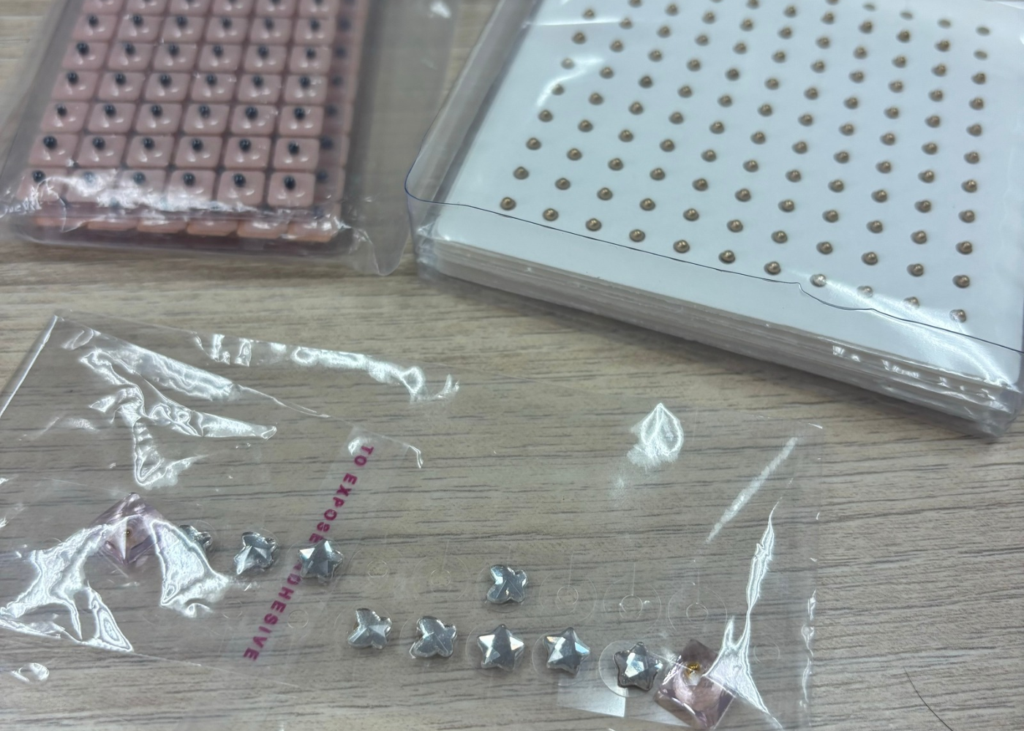
And unlike a treatment that ends when you leave the clinic, these butterflies were coming home with me. I was instructed to keep them on for three to five days — yes, including while I slept — and to massage each point several times throughout the day to keep stimulating it.
Three to five days sounded perfectly reasonable in theory. Several painful presses later, I was quietly renegotiating my commitment to 24 hours. I removed them that night, in bed.
An earful of myths
Feeling something, however, is rather different from proving that those tiny stickers can deliver the growing list of benefits attributed to them online.
Take that most elastic of wellness phrases: “balancing your hormones”.
“I think it’s important not to sell auriculotherapy as something that can simply ‘balance female hormones’,” he says. “That’s a phrase used very loosely online.”
Then there is weight loss — another corner of the ear seeding internet where expectations have become considerably larger than the seeds themselves.
Dr Kong says there are points traditionally used for appetite, stomach function and stress, which he may incorporate when a patient complains of constant hunger, cravings or stress eating. But he is unequivocal about what they cannot do: “I definitely wouldn’t tell someone, ‘Put these seeds on and you’ll lose weight.’”
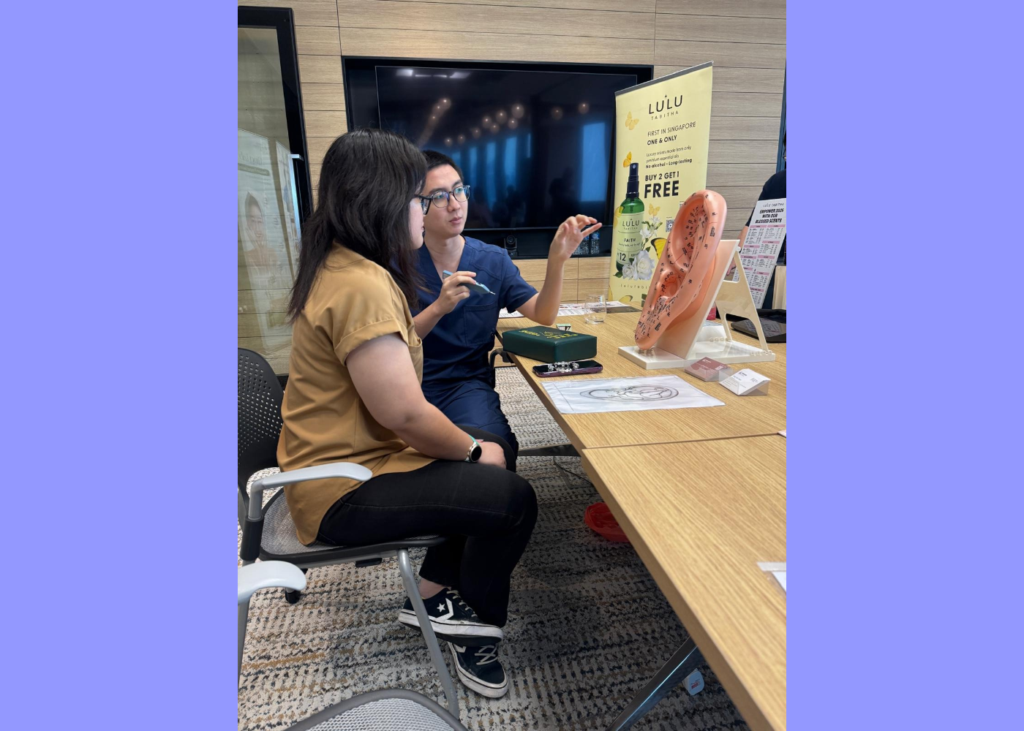
Instead, one of their more interesting benefits may be surprisingly low-tech. Because ear seeds require the wearer to press them herself, they introduce a deliberate pause at the moment a craving strikes.
“Sometimes that little pause itself helps her recognise, ‘Am I actually hungry, or am I tired, stressed or just wanting to snack?’” he says.
There has been research into auricular stimulation for weight management, with some studies reporting modest changes in weight or BMI, says Dr Kong, but he is quick to temper expectations.
Your ears, alas, are unlikely to do the heavy lifting.
The trouble with DIY
This is also where the social-media version of ear seeding starts to come unstuck.
A quick scroll online turns up neat diagrams promising “five points for anxiety”, “five points for weight loss” and ready-made kits that suggest all you need is a pair of tweezers and a reasonably good sense of where your ears are.
In reality, says Dr Lim, auriculotherapy is not quite so plug-and-play.
“There is no one ear-seed protocol for everyone,” she says.
Nor is more necessarily better. Covering your ear in seeds does not supercharge the treatment; Dr Lim says a smaller, more targeted selection of points may actually be more appropriate.
The same goes for pain. Those winces, yelps and screams that make auriculotherapy videos so entertaining should not be mistaken for proof that something is working.
“The objective should generally be gentle stimulation, not significant pain or bruising,” says Dr Lim.
And while ear seeds may appear innocuous compared with needles, non-invasive does not mean entirely risk-free.
Pregnancy is one instance where Dr Kong advises particular caution. However harmless a few tiny stickers might look, he would not recommend simply reaching for an at-home kit without first consulting a doctor or qualified practitioner.
“I would first want to know how far along she is, how the pregnancy is progressing and whether there are any complications before deciding whether auricular treatment is appropriate,” he says.
The high-tech alternative
If repeatedly pressing tiny butterflies into your ears sounds like more commitment than relaxation, there is now a rather more high-tech alternative.
At the newly opened AiRe Wellness at W Singapore, I find myself wearing what looks like a pair of rather utilitarian earrings. In fact, the two clips attached to my earlobes are delivering Cranial Electrotherapy Stimulation (CES), a gentle electrical current designed to encourage the nervous system into a calmer state.
The principle feels oddly familiar: once again, my ears are being recruited in the name of relaxation. Except this time, rather than remembering to press six tiny seeds several times a day, I have to do precisely nothing.
This, I discover, I am extremely good at.
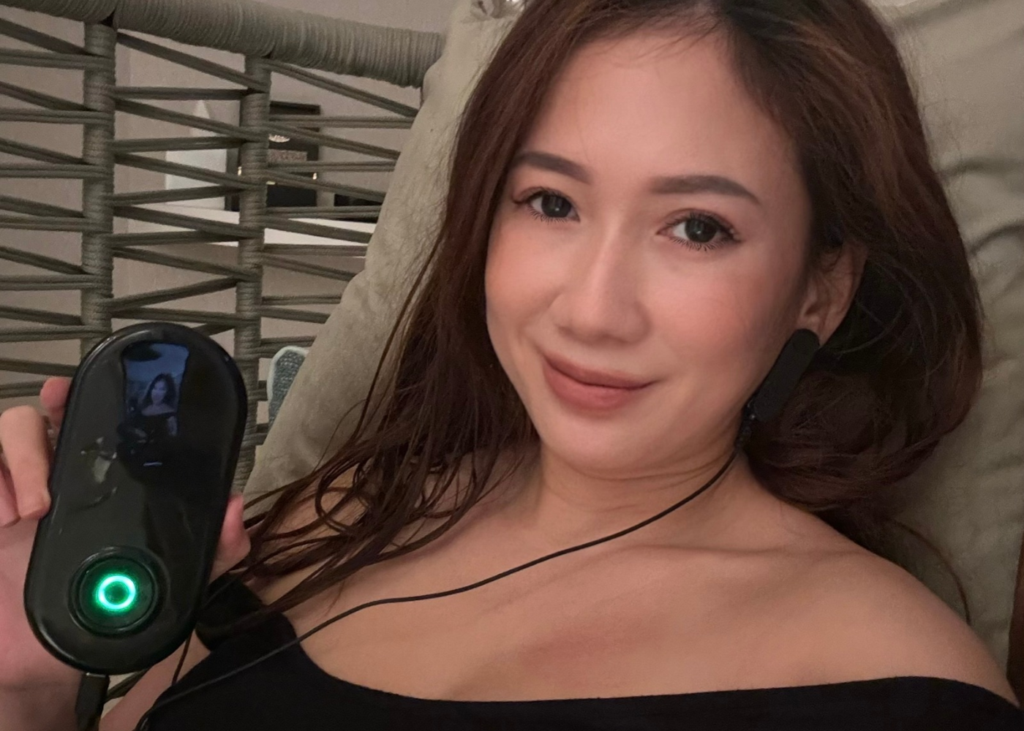
Within the 30-minute session, I find myself becoming progressively more relaxed and sleepy. The machine quietly gets on with the job while I sink further into my chair.
There is scientific interest in electrical stimulation of the ear, too, according to Dr Kong: “There is quite a bit of research interest now in particular areas of the ear because of their relationship with the auricular branch of the vagus nerve.”
For founder Derrick Seeto, that intersection between the nervous system, relaxation and sleep was precisely the appeal.
“The session is designed to help the body settle into a calmer state and support recovery,” he says.
And apparently, I am not the only one struggling to keep my eyes open. Among AiRe’s first 20-plus guests, Seeto says several reported becoming noticeably relaxed or sleepy during the session, while some said they fell asleep more easily that night and woke feeling as though they had slept more deeply.
Dr Kong, however, cautions against seeing electrical stimulation as simply ear seeding with an upgrade.
“I wouldn’t consider a seed and electrical stimulation completely interchangeable,” he says. “For something simple that a patient can continue between visits, I find ear seeds very practical.”
There may, it turns out, be room on my ears for both.
Frequently Asked Questions
What are "ear seeds" actually made of?
Historically, practitioners used the dried, natural seeds of the Vaccaria plant (an herb native to Eurasia known for its hardness and spherical shape). Today, ear seeds come in several varieties including metal pellets or beads and crystal seeds.
How does auriculotherapy work biologically?
Modern neuroscience explains auriculotherapy through cranial nerve innervation:
- The Vagus nerve connection: The external ear (particularly the concha and cymba conchae) is the only place on the human body where the auricular branch of the vagus nerve (ABVN) surfaces close to the skin. Stimulating these points sends afferent signals directly to the brainstem (the nucleus tractus solitarius), promoting parasympathetic ("rest and digest") tone, lowering heart rate, and moderating stress hormones.
- Reflex somatotopy: Discovered by French physician Dr. Paul Nogier in the 1950s, the ear serves as an "inverted fetus" map, where the lobe corresponds to the head and brain, the outer rim (helix) to the spine, and the hollow inner bowl to the internal organs.
What conditions are ear seeds commonly used for?
Clinical studies and practitioner protocols frequently use ear seeding to manage stress and anxiety, insomnia and sleep fragmentation, chronic pain and migraines, addiction and cravings, and digestive discomfort and hormonal regulation.
What are the most common ear seed points?
- Shen Men ("Spirit Gate"): Located in the triangular fossa near the top of the ear. It is the premier point for calming the nervous system, reducing anxiety, and improving sleep quality.
- Point Zero: Situated at the root of the helix; considered the master balance point that brings autonomic bodily functions back to baseline equilibrium.
- Sympathetic Point: Calms involuntary nervous tension and dilates blood vessels to ease visceral spasms.
- Endocrine, kidney and liver points: Stimulated to support hormonal balance, detoxification, and fatigue recovery.
How long do ear seeds stay on?
Typically three to five days. After five days, they should be removed to allow the skin to breathe and prevent localised irritation or skin breakdown. If you are doing continuous therapy, it is recommended to let the ear rest for 8 to 24 hours before applying a fresh set.
Do you have to press them?
Yes. While the seed provides baseline passive acupressure simply by sitting on the point, actively pressing or massaging the seeds for 30 to 60 seconds (two to three times daily) or whenever you feel stressed, in pain, or experiencing a craving enhances the effect. Apply gentle pressure until you feel mild tenderness or warmth.
Can you shower or exercise with them on?
Yes. Most ear seed adhesive patches are made from water-resistant medical tape. You can shower, wash your hair, and work out normally. Just avoid rubbing your ears aggressively with a towel, and gently pat the area dry instead.
Does ear seeding hurt?
The application itself is non-invasive and painless because it does not pierce the skin. However, when a point corresponds to an area of inflammation or tension in the body, it may feel tender, slightly sore, or warm when pressed.
Are there any risks or contraindications?
- Skin irritation or adhesive allergies: People with latex or adhesive tape sensitivities should opt for hypoallergenic or silicone-based tapes.
- Chondritis (Ear cartilage infection): Extremely rare with seeds compared to needles, but avoid placing seeds over broken, sunburned, or irritated skin.
- Accidental ear canal entry: Always remove seeds carefully using tweezers. Never sleep or scratch in a way that could push a loose seed inside your ear canal.
- Pregnancy precaution: Certain ear reflex points (such as the endocrine, uterus, and ovary points) should be avoided during pregnancy as they may stimulate uterine contraction