
Annoyed About Adult Acne? It’s Probably Not “Just a Random Breakout”

When you graduate from your 20s, there’s an unspoken social contract. You get a salary, the freedom to eat cereal for dinner, and clear skin. The breakouts were supposed to be a teenage tax. You paid it. By now, you should be collecting your reward: smooth, settled, adult skin that minds its own business.
But then you wake up at 30 with something on your forehead that has absolutely no intention of minding its business. If that sounds familiar, you’re not alone.
Adult acne in women: What’s really behind your breakouts
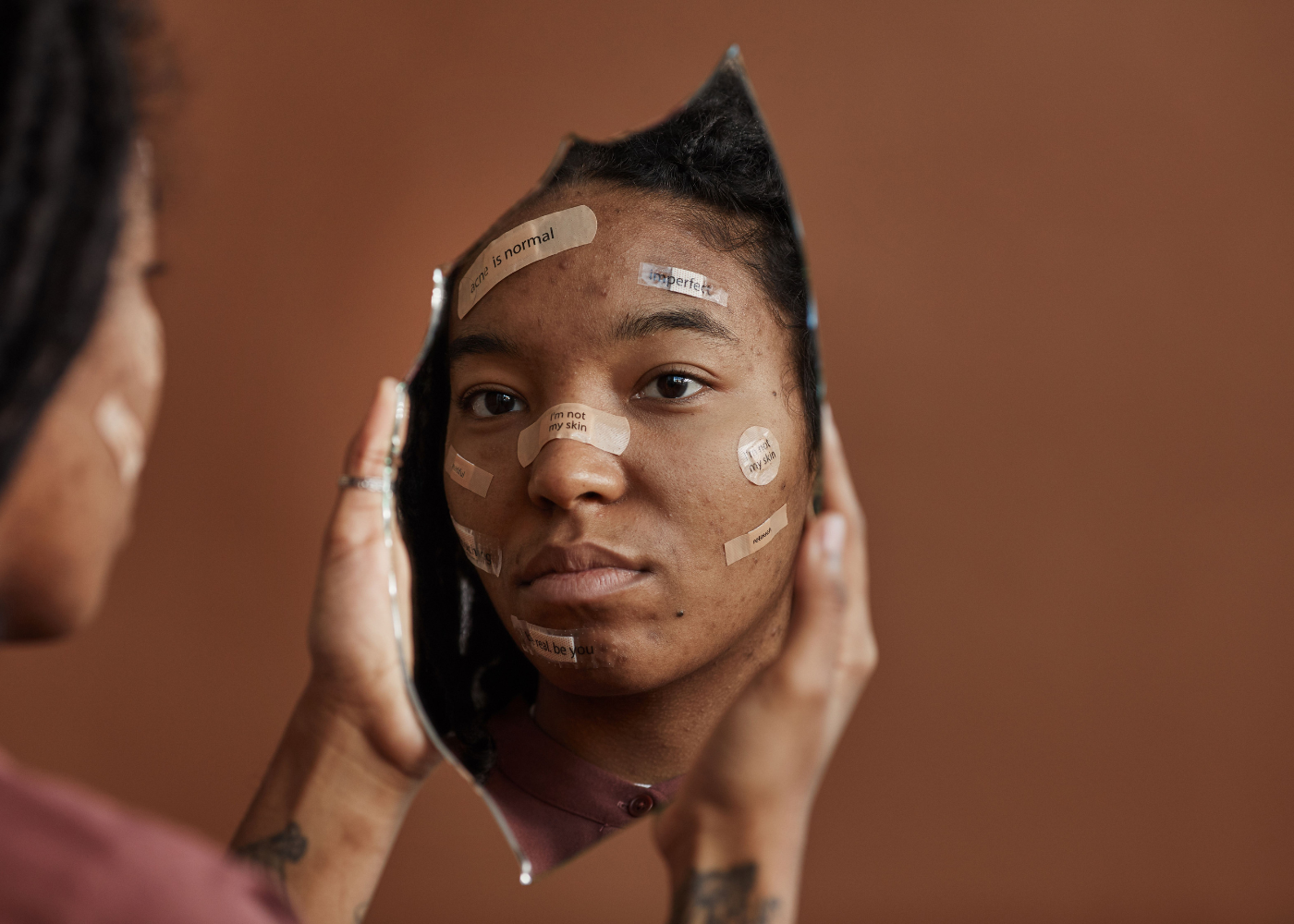
Scroll through forums like r/30PlusSkinCare or r/SkincareAddiction, and you’ll find women asking the same question: why is my skin worse now than when I was a teenager, despite the expensive serums, double cleansing, and “clean eating”?
I say this from hard-won experience. I’ve cried over breakouts I couldn’t explain, doomscrolled forums at midnight, and believed wholeheartedly in every new supplement, serum, and dietary restriction until it didn’t work either. I was the person who rubbed Nizoral anti-dandruff shampoo on her face because someone online said it might be fungal acne. It was not fungal acne. Nothing worked.
What started as a handful of spots became something else entirely. The ordinary pimples gave way to deep, painful cysts that parked themselves under the skin for weeks, leaving angry red marks long after they’d departed. I went from monthly facials to calls for help twice a month. Things would calm briefly, then flare again.
Why is it happening now?
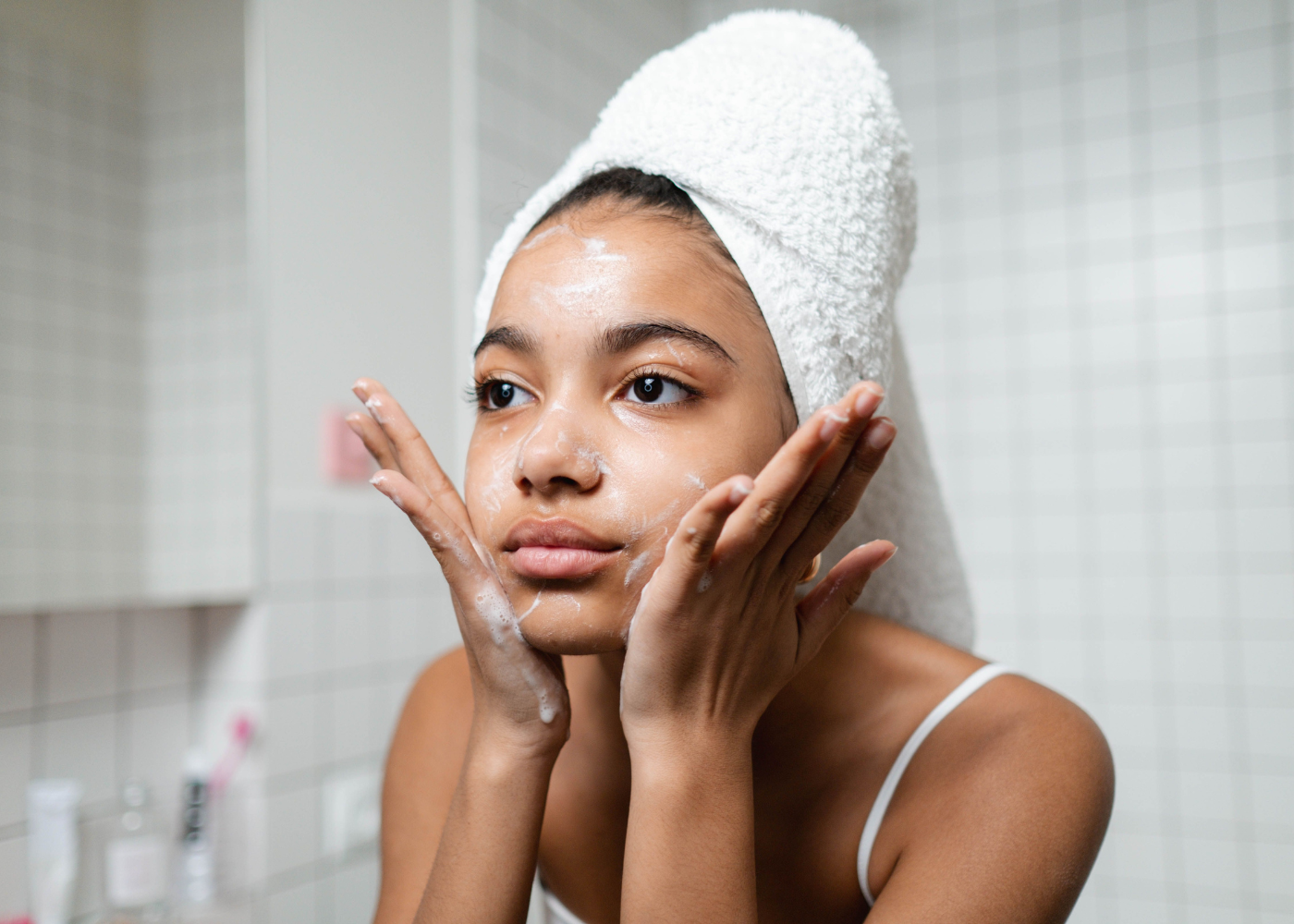
Let’s start with the most important thing: it’s not because you aren’t washing your face properly. “One of the biggest myths I encounter in the clinic is that adult acne is caused by poor hygiene,” says Dr Angeline Yong, founder of Angeline Yong Dermatology. “In reality, adult acne is driven by a combination of hormonal influences, genetics, excess sebum production, abnormal skin-cell turnover, and inflammation within the skin. The issue is not that the skin is ‘dirty,’ but rather that pores become clogged due to excess oil production and abnormal shedding of skin cells.”
There. Someone said it. The shame that often accompanies a breakout at 35 is scientifically unfounded. A local study found that roughly 41% of adults experience acne, with women disproportionately affected. You are, statistically, extremely normal. What makes the hygiene myth particularly damaging is the behaviour it encourages. The belief that acne comes from dirty skin leads women to over-cleanse, which strips the skin barrier and, in a cruel twist, makes breakouts worse.
“Effective management starts with identifying the underlying drivers rather than simply trying to scrub the problem away,” Dr Yong adds. Washing more aggressively isn’t the answer. In many cases, it’s actively part of the problem.
Adult acne also behaves differently from the teenage kind. Teen acne is largely oil-driven and temporary. Adult acne is typically deeper, more persistent, and driven by multiple overlapping factors. For some women, it’s a continuation of teenage acne. For others, it appears for the first time in adulthood, which makes it feel particularly baffling. There is rarely just one cause, which is frustrating, but also means there are usually specific, addressable triggers worth identifying.
In my case, I tried everything. Eating clean, cutting dairy and sugar, and taking different supplements. One morning, I looked in the mirror and couldn’t take it anymore, so I booked an appointment at an aesthetic clinic. That was easily one of the best decisions I’ve made.
What followed wasn’t a quick fix. I was prescribed a combination of oral and topical treatments. The first month was rough. In acne treatment, things get dramatically worse before they improve. I experienced the initial breakout, where existing congestion is pushed to the surface. Within two weeks, my skin got worse. Dryness, peeling, sensitivity, and low-grade despair. A somewhat unhinged message to my dermatologist came back with three words: “This is normal”. By the second month, things quietly began to change.
Blame the hormones (but gently)
If adult acne in women had a main character, it would be hormones. Research shows that up to 85% of adult women report their acne worsening in the days before menstruation, making hormonal fluctuations the most consistent and most frustrating driver of adult breakouts, largely because they’re outside your control.
“During the menstrual cycle, many women experience a relative increase in androgen activity in the days leading up to their period,” explains Dr Yong. Androgens are sex hormones that drive the skin’s oil-producing glands. In women, even small fluctuations in their levels can affect sebum production. “These hormones stimulate the sebaceous glands, increasing oil production and making pores more susceptible to blockage.”
The location is often a clue: “Hormonal acne commonly appears along the lower face, including the chin, jawline, and neck,” she adds. If yours follows a predictable monthly pattern, your cycle is likely the main culprit.
Pregnancy and the post-partum period bring their own hormonal volatility. Some women experience clearer skin during pregnancy, while others develop new or worsening acne after delivery.
If your periods are irregular or you’re experiencing symptoms like excess facial hair, scalp hair thinning, or unexplained weight gain alongside persistent acne, it’s worth getting assessed for PCOS.
“Women who experience persistent adult acne together with irregular periods or excessive facial hair should not ignore these symptoms, as they may indicate an underlying hormonal disorder,” Dr Yong advises. “Not every woman with acne has PCOS, but acne can sometimes be an external sign of an underlying hormonal imbalance.”
Surprise! Perimenopause can bring back acne, too
“Most women don’t associate acne with perimenopause,” says Dr Jody Paige Goh, Chief Medical Officer and Cofounder at Hey Taylor, a women’s health clinic focused on perimenopause and menopause. The timing can catch people off guard: while menopause typically occurs around age 49 to 51, the hormonal changes leading up to it can begin in the late 30s or early 40s.
As oestrogen declines faster than androgens, the skin receives a stronger androgen signal, prompting the oil glands to ramp up production. The breakouts often look different from teenage acne. “Instead of affecting the forehead and T-zone, perimenopausal acne is more likely to appear along the jawline, chin and lower face,” she notes. “The spots also tend to be deeper, more painful and slower to heal.”
Products that suited your skin in your 30s may no longer work the same way. Perimenopausal skin is drier and more reactive, and aggressive acne treatments can sometimes worsen irritation rather than resolve it.
“One of the biggest misconceptions is that acne in your 40s is caused by poor skincare,” Dr Goh says. “In reality, it’s often driven by hormonal changes rather than anything you’re doing wrong.” Oestrogen declines, androgens increase, driving up oil production and breakouts.
Your cortisol and sleep hygiene are texting your oil glands

Stress acne isn’t your imagination, and it has a mechanism. “When we experience chronic stress, the body releases higher levels of cortisol,” explains Dr Yong. “Cortisol can stimulate sebaceous gland activity, increase inflammatory signalling within the skin, and impair barrier recovery, creating conditions that favour acne formation.”
A 2023 study in Microorganisms confirmed a direct correlation between elevated stress levels and increased sebum production. Sunday night work anxiety may be contributing to your Monday morning breakout. For women navigating Singapore’s demanding work culture, this is less a lifestyle footnote and more a daily reality.
Sleep is where the cycle either breaks or continues. A 2019 clinical guide on adult female acne found that poor sleep disrupts the body’s ability to regulate stress hormones and may worsen acne.
“The postulated mechanism is that when you’re sleep-deprived, your body produces higher levels of the stress hormone cortisol. Chronically elevated cortisol can increase androgen activity,” explains Dr Sarah Too, founder and medical director of Astria Medical Aesthetics.
“Much of the skin’s regeneration and recovery occurs during deep sleep,” she adds. “When sleep is consistently disrupted, the skin barrier becomes compromised, and the body’s ability to regulate inflammation becomes less efficient. As a result, existing acne may take longer to heal.”
This, incidentally, is the science behind what people call “beauty sleep.” “We often focus on what we put on our skin,” Dr Yong adds, “but sometimes the most powerful skincare intervention is simply getting enough restorative sleep.” Sleep isn’t separate from your skincare routine. It’s your skincare routine.
And it runs both ways. The psychological weight of having acne can elevate stress levels, feeding the cycle all over again. Treat both the skin and the stress with equal seriousness, and extend yourself a little grace while you do.
Your gut has a lot to say about your face

Here’s something your dermatologist might not have mentioned yet: your gut is involved. A 2025 genetic study published in Skin Health and Disease found that the specific bacteria living in your gut can directly influence whether you break out. Women with more protective gut bacteria had a lower risk of acne, while those with more harmful bacteria faced a higher risk.
A 2023 study correlating gut bacteria with acne lesion types found that specific strains are connected to deep inflammatory cysts while others are linked to surface-level breakouts.
So what you eat can show up on your face in ways that go beyond the obvious. Dr Sarah explains two mechanisms at play. The first is blood sugar: foods with a high glycaemic index spike blood sugar, which drives up insulin and IGF-1, a growth hormone that stimulates oil production. The second is dairy: cow’s milk contains hormones such as IGF-1 and estrogen, which can ramp up sebum production and inflammation. In Singapore, this plays out in our everyday food choices.
“Many of our everyday foods are high on the glycaemic index, including rice and noodles found in local dishes such as char kway teow and chicken rice, as well as drinks that contain sugar and milk, such as kopi, teh, and bubble tea,” she says. That said, Dr Sarah is clear that diet is only part of the picture. “Genetics, stress, and hormones all play a role.”
You don’t need to give up everything entirely. But understanding that diet may be one of several factors influencing acne is a helpful starting point.
For those considering probiotics, Dr Sarah notes that emerging research suggests certain strains may help reduce inflammation and support skin health. Still, she cautions that “probiotics should be viewed as a supportive tool rather than a primary treatment.”
Ultimately, effective acne management requires a holistic approach that addresses the root causes through evidence-based treatments, appropriate skincare, a balanced diet, stress management, and good sleep habits.
The skincare overload paradox
The irony? One of the increasingly common causes of adult acne is doing too much skincare.
Dr Yong sees it often. “Many patients come into the clinic using multiple exfoliating acids, retinoids, vitamin C products, brightening serums, and other active ingredients simultaneously because they are trying to achieve perfectly smooth, luminous ‘glass skin’,” says Dr Yong. “Unfortunately, more is not always better.”
“When too many active ingredients are layered together, the skin barrier can become compromised,” Dr Yong explains. “Once damaged, patients often experience increased sensitivity, redness, stinging, dryness and, paradoxically, more breakouts.” Sometimes, Dr Yong notes, the skin responds to over-stripping by producing even more oil to compensate, giving rise to worsening congestion.
The fix, counterintuitively, is less. “Sometimes the most effective intervention is simplifying the routine and allowing the skin barrier to recover,” Dr Yong says. Strip back to a gentle cleanser, a light non-comedogenic moisturiser, and sunscreen. Let the skin settle. Next, reintroduce actives slowly, one at a time.
What practical fixes actually improve adult acne
Adult acne is far more common than the curated skin you see online. The good news? There are a few things that genuinely help.
- Track your breakouts and what’s happening around them, whether that’s your cycle, work stress, trying a new product, or too much sugary bubble tea.
- See a dermatologist sooner rather than later, not as a last resort but as a starting point.
- Simplify your routine before adding to it.
- Treat sleep and stress with the same seriousness, because they do more for your skin than most serums.
For active breakouts, Dr Sarah’s top pick is retinoids. “Retinoids work by reducing sebum production and increasing skin cell turnover,” she explains, noting that prescription retinoids are typically more effective than over-the-counter retinol for acne control.
Her other three recommendations: salicylic acid, which exfoliates inside the pores to reduce blackheads and whiteheads; benzoyl peroxide, which eliminates acne-causing bacteria and reduces inflammation; and niacinamide, which regulates sebum while calming redness.
The key, she says, is how you introduce them. “I recommend starting with lower concentrations or alternating their use, to allow the skin time to build tolerance.” Begin with one or two ingredients rather than all four at once.
And please, for the love of clear skin, stop googling Nizoral shampoo. It won’t help.
The bottom line
Adult acne isn’t a reflection of how well you take care of yourself. It’s not a hygiene problem, a character flaw, or evidence that you’re doing something wrong. It’s a medical condition with biological roots, and it deserves to be treated as one.
Understanding what’s actually driving your skin, whether that’s hormones, stress, your gut, or your twelve-step routine, is where real progress starts. Getting there, with the right help and a little less self-judgment, is one of the more worthwhile things you can do for yourself.
Sources
- Dr Angeline Yong, founder, Angeline Yong Dermatology.
- Adult acne prevalence in Singapore: 41% of adults experience acne, with postadolescent acne more common in women (69%) — Oon HH et al., “Acne Management Guidelines by the Dermatological Society of Singapore,” Journal of Clinical and Aesthetic Dermatology (2019).
- Excessive skin washing as an aggravating factor for adult female acne; skin barrier damage and inflammatory cascade; sleep deprivation and stress hormone secretion as acne aggravating factors — Bagatin E et al., “Adult female acne: a guide to clinical practice,” Anais Brasileiros de Dermatologia (2019).
- Late-onset acne appearing for the first time in adulthood as a distinct subtype; up to 85% of adult women report acne worsening in the days before menstruation; perimenopause and falling oestrogen driving relative androgen increase and acne flares — Zeichner JA et al., “Emerging Issues in Adult Female Acne,” Journal of Clinical and Aesthetic Dermatology (2017).
- Role of androgens as sex hormones in human biology and metabolic regulation — Alemany M, “The Roles of Androgens in Humans: Biology, Metabolic Regulation and Health,” International Journal of Molecular Sciences (2022).
- Dr Jody Paige Goh, Chief Medical Officer and Cofounder, Hey Taylor.
- Cortisol levels and sebum production correlation; different gut bacteria correlating with inflammatory versus non-inflammatory acne lesion types — Sivamani RK, Maloh J, Nong Y, “Correlating the Gut Microbiota and Circulating Hormones with Acne Lesion Counts and Skin Biophysical Features,” Microorganisms (2023).
- Bidirectional relationship between acne and psychological stress; acne patients showing significantly higher depression and loneliness scores — Öztekin C, Öztekin A, “The association of depression, loneliness and internet addiction levels in patients with acne vulgaris,” Biopsychosocial Medicine (2020).
- Gut microbiota and acne risk: specific gut bacteria influencing acne risk, with protective and harmful bacterial taxa identified — Cao F et al., “Gut microbiota and acne risk: a genetic approach,” Skin Health and Disease (2025).
- Dr Sarah Too, founder and medical director, Astria Medical Aesthetics.
- IGF-1 increases sebum production and inflammatory biomarkers in sebaceous glands; high glycaemic diet increases insulin and IGF-1 — Kim H et al., “Insulin-Like Growth Factor-1 Increases the Expression of Inflammatory Biomarkers and Sebum Production in Cultured Sebocytes,” Annals of Dermatology (2017).
Important Notice: This article is for general information and should not be considered medical advice. While we strive for accuracy, medical conditions vary, and the treatments mentioned may not suit everyone. Consult a qualified healthcare professional for personalised medical guidance.