

PCOS is now PMOS. One letter changed. But for women with PMOS, it means much more than that

For years, Singaporean content creator Mongchin Yeoh, better known as Mongabong, had wildly irregular periods. She was 16 years old when her first cycle finally arrived – long after all her peers – right in the middle of badminton training. She was ecstatic; her teammates celebrated her official initiation into womanhood.
But then, her second period didn’t show up until six months later. In the years that followed, the interval between her cycles stretched anywhere from two to six months. She suspected she had PCOS (Polycystic Ovary Syndrome), but did not have the usual symptoms like unexplained weight gain and excess facial hair.
It wasn’t until she saw a specialist at 28 that a pelvic ultrasound scan and blood tests confirmed her suspicions that she had PCOS.

Ms Yeoh is far from alone in her long and winding health journey. There are countless stories about women going decades before getting a proper diagnosis or struggling to even connect their symptoms to a name that doesn’t quite fit.
“I really doubted myself until I received the diagnosis,” said local actor-writer Miriam Cheong, who was diagnosed in 2018 after experiencing trouble with weight loss, hirsutism, and going bald. “The doctors explained it in a very barebones way, and I didn’t have a lot of options in terms of symptoms management.”
For this condition at least, the medical world seems to be catching up. In May, a landmark consensus published in The Lancet argued that the name for PCOS, which affects an estimated 170 million women worldwide and is one of the leading causes of infertility, was “inaccurate and potentially harmful”.
It took 14 long years of collaboration between global experts and patients before the decision was made to change PCOS to PMOS (Polyendocrine Metabolic Ovarian Syndrome). One letter. That’s technically all that’s changed, at least on the surface. But the name change represents so much more for those with the condition.
“The name change was honestly quite liberating for me,” said Ms Yeoh, who was diagnosed in 2022. “For the longest time, my diagnosis of PCOS wasn’t quite like the usual one. Now that the name has changed to PMOS … I feel it’s much more all-encompassing of the different ways (the condition) can show up in our bodies,” she added.
What is PMOS?

For those who aren’t aware of this condition, PMOS is more common than we think. It affects around one in eight women globally, though the actual number could be much higher, as up to 70 per cent of affected women are undiagnosed.
I’d wager a big reason could be that Polycystic Ovary Syndrome was never a particularly helpful name to begin with. For starters, the word “polycystic” is misleading. It suggests having many cysts, when in fact the “cysts” are follicles that have not developed properly enough to release an egg due to hormonal abnormalities.
By focusing on the ovaries, the old name also shaped the misconception that the condition was mainly a gynaecological or fertility issue. In reality, PMOS can affect everything from hormonal regulation to metabolism, skin, mental health and cardiovascular risk.
Compounding matters further, the old name also failed to highlight key underlying mechanisms such as insulin resistance and endocrine imbalance, which have led to under-recognition in both patients and healthcare professionals, experts say. In fact, a paper published in The Annals of the Academy of Medicine, Singapore, found that 60.5 per cent of doctors who took part in a study were unable to identify clinical features of PCOS correctly.
Is it any wonder then that many women end up getting unclear advice and inconsistent treatment?
“I was given birth control, metformin and told to lose weight. To which I thought, ‘But I’m here because I can’t lose weight’. I felt like I could only rely on myself and my fellow friends with PMOS for help,” said Ms Cheong, who together with local theatre performer Shannen Tan created a play called Lotus Root Support Group in 2022 and 2024 to describe their experience with PMOS.
While a new acronym doesn’t alter current diagnosis or treatment options, it does change the conversation.
The new name makes the metabolic and endocrine nature of the condition explicit, supporting the call for earlier screening and better prevention of long-term risks such as type 2 diabetes and cardiovascular disease, said Dr Veronique Viardot-Foucault, Director and Senior Consultant of Clinical Endocrinology at the Department of Reproductive Medicine at KK Women’s and Children’s Hospital.
Because symptoms can vary wildly for different women, a diagnosis requires ticking at least two out of three of the main criteria: signs or symptoms of high androgens (think excess facial or body hair, hair loss, acne or oily skin) or an elevated blood level of testosterone; irregular or absent menstrual periods; and polycystic ovaries.
Right now, there is no cure for this condition, but treatment, including lifestyle and dietary changes as well as exercise, can help with symptoms.
High-profile figures such as fashion designer Victoria Beckham, who have struggled with PMOS, are known for having a rigid diet. Even birthdays aren’t spared – the former Spice Girl once celebrated her birthday with a watermelon “cake” topped with berries and a single candle.
How do Asian women experience PMOS differently?
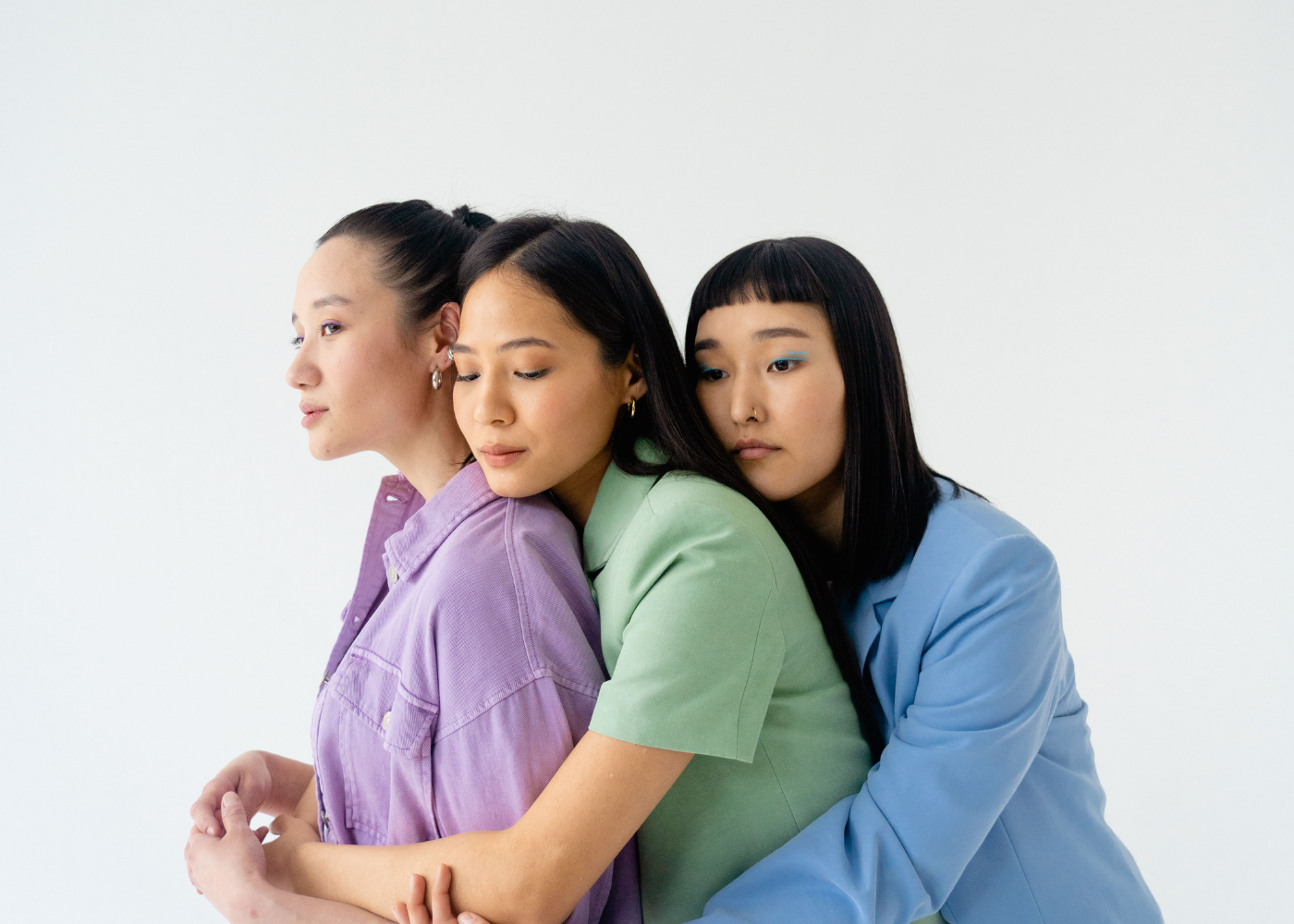
Asian women with PMOS often present differently from Western women, both in symptoms and in how the condition is recognised, said Dr Viardot-Foucault.
First of all, it is important to recognise that “Asian women” is not a single group, with differences among South Asian, East Asian, and Southeast Asian populations. In general, however, Asian women – including those in Singapore – are less hirsute than their Western counterparts, which in layman’s terms means they are less likely to have excessive facial or body hair.
Many Asian women also tend to have a “lean” PMOS profile. This means they may have a normal or lower body weight than Caucasians, but can still experience significant insulin resistance and an increased risk of type 2 diabetes.
“This can make the condition harder to recognise and may contribute to later diagnosis,” said Dr Viardot-Foucault.
For Singaporean women specifically, a recent study by the National University Hospital (NUH) and NUS Medicine showed that many patients have a milder SHBG subtype and better in-vitro fertilisation (IVF) odds, even at older ages.
What’s next?
The adoption of the new name PMOS can be expected to be gradual rather than immediate.
As of May 22, the World Health Organization’s website, as well as those of major health institutions in Singapore, still listed the condition as PCOS rather than PMOS. A search for the keyword PMOS on those sites yielded zero results.
“Overall, full global adoption will likely take several years, as it requires coordinated changes across healthcare systems, education, research, and policy-making,” said Dr Viardot-Foucault.
Realistically, it’s more likely than not that women diagnosed with PMOS tomorrow will probably still receive many of the same tests, medications and lifestyle advice. But perhaps what’s important is that the name change reflects a broader shift toward better recognition of complex conditions affecting women.
“I’m glad PMOS is getting a spotlight – it’s so common yet so under-researched,” said Ms Cheong. “It …affects so many other things in life, and that’s what’s so scary about it.”
Sources
- My journey with PCOS – Mongabong YouTube channel, 9 Oct 2022
- Mongabong health update – Mongabong YouTube channel, 17 Feb 2022
- Polyendocrine metabolic ovarian syndrome, the new name for polycystic ovary syndrome: a multistep global consensus process – The Lancet (May 12, 2026)
- Key facts of PCOS – World Health Organization’s fact sheet on PCOS
- Singapore doctors unable to identify correct PCOS clinical features – Polycystic ovary syndrome v.2023: Simplified diagnostic criteria for an East Asian phenotype, The Annals ( official medical journal of the Academy of Medicine, Singapore)
- Victoria Beckham’s watermelon birthday cake – Victoria Beckham’s Instagram page
- PCOS still listed as PCOS on KKH website – KKH website
- PCOS still listed as PCOS on SingHealth website – SingHealth website
- Singapore women with PCOS have a milder subtype and better IVF odds, even at older ages – New findings offer fertility hope for women with PCOS, NUHS
Important Notice: This article is for general information and should not be considered medical advice. While we strive for accuracy, medical conditions vary, and the treatments mentioned may not suit everyone. Consult a qualified healthcare professional for personalised medical guidance.