

How to protect your brain health in your 30s and 40s: The habits that matter most

My brain has recently developed a flair for slapstick. It lets me search the house for sunglasses that are already on my head, forget what I’m about to say halfway through a sentence, and open my laptop only to stare at the screen like it owes me an explanation. At this point, it feels less like a finely-tuned machine and more like an internet browser with 47 tabs open, including 27 frozen ones.
It turns out there’s a name for this, and it’s not simply getting older, being lazy, or failing to take enough magnesium. It’s something experts are increasingly taking seriously and seeing more of. Let’s talk about women’s brain health.
Brain health for women: The burnout brain
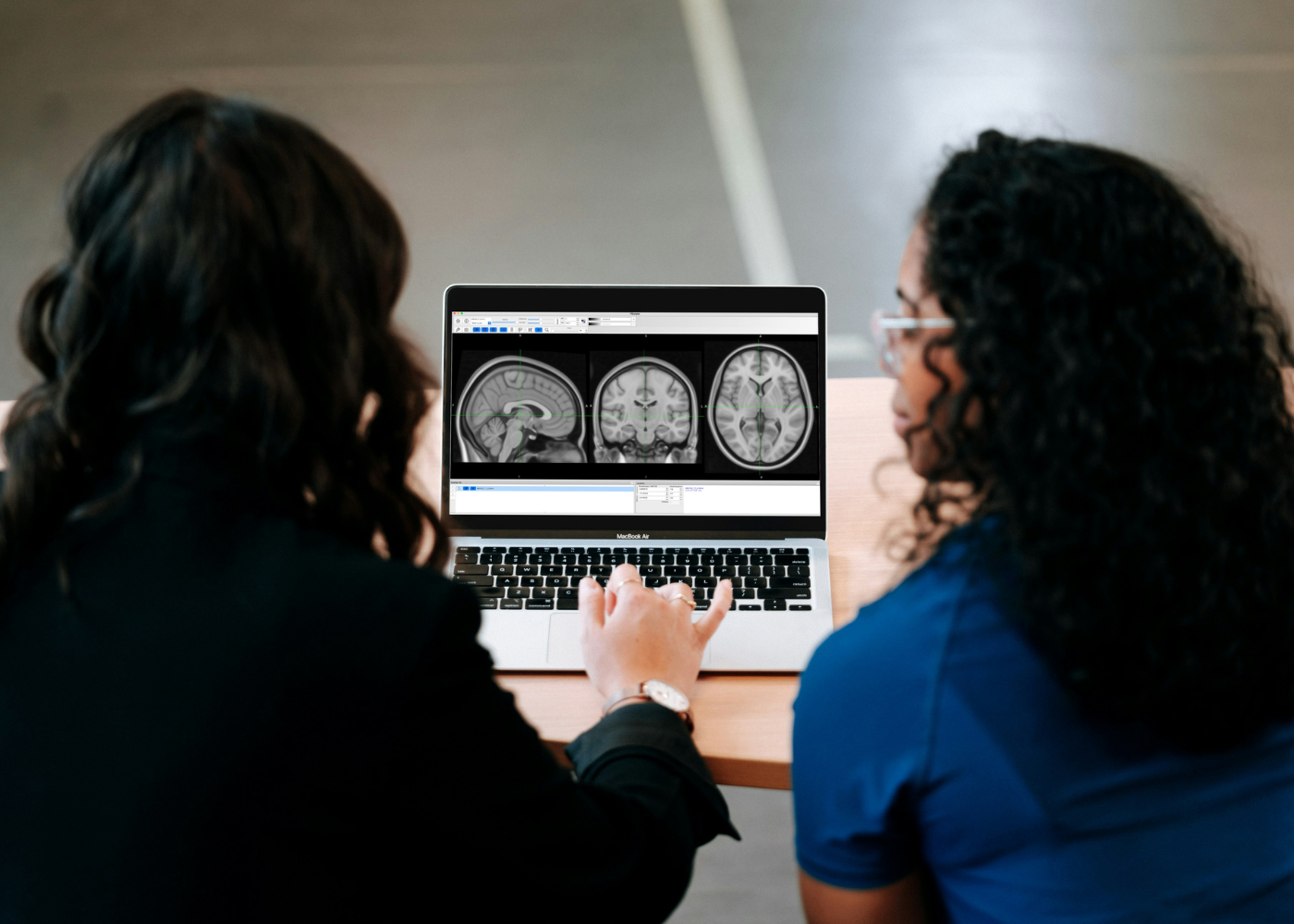
As the Medical Architect and Founding Medical Mentor of EIR LIV, a brain health-focused wellness and longevity members’ club opening in Sydney, Dr Olivia Lesslar says she sees a growing number of women in their 30s and 40s presenting with brain fog, cognitive fatigue, burnout and reduced focus.
“More commonly, it is not driven by a single pathology. Rather, it is an accumulation of chronic stress, poor sleep, hormonal transition, cognitive overload and insufficient recovery,” she says, adding that many women are carrying “enormous invisible loads”, balancing careers, caregiving, parenting, relationships, emotional labour and the relentless pressure of self-optimisation.
She suspects many women in Asia may delay seeking help because burnout is still not widely recognised as something worth addressing until it becomes severe.
The problem, experts say, is that many of us define brain health far too narrowly. We panic the moment we forget a name or misplace our keys, assuming cognitive decline begins and ends with memory.
But the picture, it turns out, is considerably more interesting – and less catastrophic – than that.
According to sport and clinical psychologist Santiago Brand, brain health is far broader than what we think.
“A healthy brain is not necessarily one that performs at maximum capacity and intensity all the time,” he says. “A healthy brain function includes sustained attention and mental clarity, emotional regulation, stress resilience and cognitive flexibility, among other things.”
Brain drain begins early
That distinction matters because many of the things we dismiss as “mom brains” or “forgetfulness” may actually be early warning signs of a brain under chronic strain.
Studies have shown that our brains change with age. The hippocampus — the part of the brain responsible for learning and memory — begins to shrink after 50.
However, a recent study released by UK Biobank, one of the world’s most comprehensive datasets of biological, health and lifestyle information, looked at 11,000 postmenopausal women and found that earlier menopause was linked to accelerated brain ageing. Women who went through menopause earlier showed biological signs of faster brain ageing, including changes linked to Alzheimer’s risk, brain shrinkage, and damage to the brain’s white matter, which helps different parts of the brain communicate efficiently.
But experts say the story of brain health begins much earlier, shaped by habits that accumulate over time. This is especially true in a city like Singapore, where high stress, long work hours, convenience eating and chronic sleep deprivation — or, as we like to call it, “being productive” — have become deeply normalised.
Many of the strongest protective factors for long-term brain health are surprisingly unglamorous. No, it’s not another supplement stack or an app that promises to optimise your neurons. It’s consistent sleep, blood sugar regulation, stress management and social connection, all of which appear to influence cognitive ageing decades before dementia symptoms emerge.
A landmark 12-month aerobic exercise trial, published in PNAS in 2011, offers more hopeful findings: cognitive ageing isn’t a one-way slide. In healthy older adults, regular aerobic exercise was associated with a 2% increase in hippocampal volume — an area central to learning and memory — alongside improvements in spatial memory.

Lesslar says one of the biggest misconceptions is that brain health only matters once memory problems begin.
“Brain health does not suddenly become relevant at 70,” she says. “Many people in their 20s to 40s already have early insulin resistance, visceral fat accumulation or impaired glucose regulation despite having a normal body weight, and this matters because metabolic dysfunction is increasingly being linked to neuroinflammation, vascular injury and dementia risk.”
That means the habits and pressures of our 30s and 40s matter more than people realise.
Brand agrees that midlife is the time to be proactive, not reactive: “There is a growing body of evidence that shows that neurodegenerative conditions like Alzheimer’s and Parkinson’s start in our 30s and 40s, with the more severe manifestations of the symptoms appearing later in life when it might be too late.”
Are you really tired or is it a red flag?
Of course, not every forgotten password or misplaced set of keys is cause for alarm. Lesslar says normal stress-related forgetfulness is usually temporary and tends to improve with rest, better sleep or reduced stress. She advises women to seek professional help when forgetfulness becomes persistent, progressive or starts interfering with daily life.
“Getting lost in familiar tasks, language disturbances, personality change, or symptoms associated with neurological signs, severe mood changes or significant impairment in work, relationships or independent functioning are all signs that warrant closer attention,” she says.
For women wanting a better understanding of their brain health, tools like qEEG (quantitative electroencephalogram) brain mapping are increasingly being used alongside more traditional psychological assessments.
That is how I find myself at New Leaf Counselling and Integrative Health, donning a chunky helmet-like device that’s equal parts Formula One headgear and futuristic mind-reading machine.

As I sit there feeling slightly silly, the helmet’s electrodes record my brain-wave activity in real time for 20 minutes, helping identify stress, focus, sleep and, hopefully, proof that my brain fog is not early-onset Alzheimer’s.
The next day, Brand and I do a Zoom call, where he walks me through what goes on in my head based on the screen’s little squiggly lines — brain waves, if we’re being scientific.
The verdict: my brain has a terrible off switch. Even at rest, it stays overstimulated and alert, constantly looking for the next thing to think about, fix, or mildly catastrophise. That mental overdrive, he explains, may show up as anxiety, impatience, and even short-term memory lapses.
Perhaps I’m not losing my mind after all; it was simply running at full wattage for too long.
Rebooting your brain
Sleep is another underestimated tool for brain health – inconvenient for those of us who treat midnight as a time for doomscrolling Instagram.
An article published in one of the world’s top peer-reviewed academic journals, Science, shows that during deep sleep, the brain’s glymphatic system — sometimes described as its waste-clearance system — becomes more active, helping to flush away metabolic waste and proteins linked to neurodegenerative disease.
Put less elegantly, your brain appears to clean itself while you sleep — which is unfortunate for those of us living in a country where sleep is often treated as the first thing to cut from the schedule.
Lesslar believes the first practical shift is one of the hardest: recognising that supporting your own health isn’t selfish.
“Many women are conditioned to care for everyone else first,” she says. “But you cannot sustainably give from a depleted nervous system.”
In other words, the oxygen mask analogy exists for a reason.
She also believes boundary-setting may be one of the most underrated brain-health interventions available. Constant availability, overcommitment, and chronic people-pleasing, she says, create persistent cognitive and physiological stress.
“Protecting your time, energy and recovery is not indulgent,” she says. “It is a form of preventative healthcare.”
Brand agrees and cautions against relying too heavily on generic “brain games” that promise sharper cognition. While they may improve performance within the game itself, he says there’s little evidence they create meaningful long-term improvements in attention, emotional regulation, or stress resilience.
So, if the solution isn’t brain games or supplements, what does the evidence actually point to?

Brand points to more evidence-based approaches like neurofeedback therapy, a non-invasive technique used even by NASA astronauts to help the brain better regulate its own electrical activity.
“The goal is not to create a ‘super brain’,” he says. “The goal is to help the brain function more efficiently, flexibly and sustainably.”
Meanwhile, Lesslar is particularly wary of the wellness industry’s obsession with supplements.
“There is a tendency to overmarket supplements as quick cognitive fixes, particularly when foundational health is poor,” she says. “If someone is chronically sleep-deprived, sedentary, stressed and metabolically unhealthy, no supplement will compensate for that.”
She believes we may have become a little too eager to outsource health to powders, capsules, and “optimisation stacks”, while ignoring the boring basics sitting in our kitchens and daily routines. Whole foods, she points out, exist within complex biological systems containing fibre, micronutrients and synergistic compounds that science still doesn’t fully understand.
Brand is also dismissive of the idea that it is “too late” to improve brain health after a certain age: “Modern neuroscience has repeatedly demonstrated that the brain remains capable of adaptation, learning and reorganisation throughout life. Neuroplasticity does not suddenly disappear in adulthood.”
Frankly, that feels reassuring in an era where many of us already speak about our brains like expired laptops.
Tips: Brain care 101
Experts say protecting cognitive function often starts with consistently mastering the fundamentals.
- Prioritise deep, regular sleep
- Move constantly, especially aerobically
- Protect metabolic health
- Set boundaries
- Don’t simply outsource brain health to supplements
- Seek help when symptoms change
My brain fog, it turns out, wasn’t a sign that something was irreversibly wrong. It was a sign that something needed to change. And that, at least, is a much more manageable problem.
Important Notice: This article is for general information and should not be considered medical advice. While we strive for accuracy, medical conditions vary, and the treatments mentioned may not suit everyone. Consult a qualified healthcare professional for personalised medical guidance.